Aluminium Scaffold Tower Assembly Methods: 3T vs. AGR Procurement Guide (2026)
Aluminium scaffold tower buying guide comparing 3T and AGR assembly methods, EN 1004 compliance, cost, safety, and RFQ checks for 2026 procurement teams.
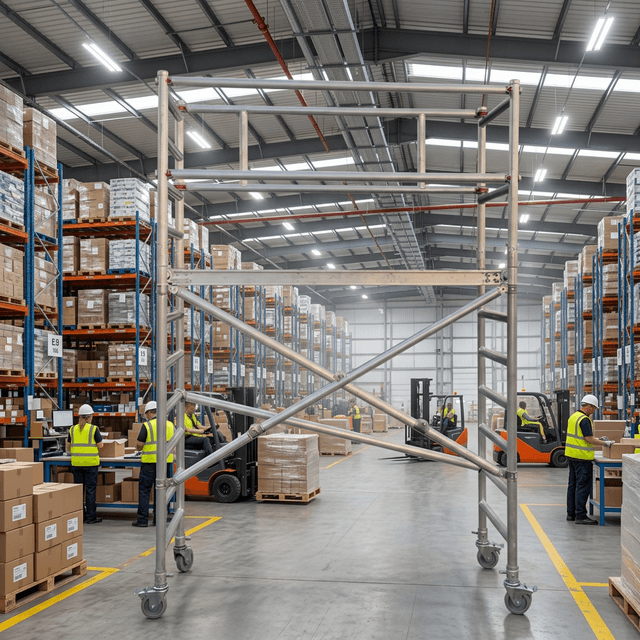
One-line buyer decision: When procuring aluminium mobile scaffold towers, choosing between the 3T (Through The Trapdoor) and AGR (Advanced Guard Rail) methods is a trade-off between initial CapEx and collective fall protection. AGR provides superior safety compliance required by strict Tier-1 contractors, while 3T offers lower initial costs and greater configuration flexibility.
For procurement teams, fleet managers, and site safety engineers operating in 2026, the selection of an aluminium scaffold tower goes far beyond dimensions and load capacities. With increasing scrutiny from safety regulators, main contractors, and site auditors, how a tower is assembled is often reviewed as closely as its structural integrity.
The two widely recognized safe methods for erecting an aluminium access tower under the BS EN 1004-1:2020 standards path are 3T (Through The Trapdoor) and AGR (Advanced Guard Rail). Both methods are designed to prevent the operative from ever standing on an unguarded platform. However, they achieve this through entirely different component ecosystems, which directly impacts your procurement CapEx, fleet management, and site compliance.
This guide provides an in-depth, evergreen comparison of 3T and AGR systems to help buyers make informed, compliance-driven purchasing decisions.
Scope note, reviewed July 18, 2026: This guide is for procurement screening of EN 1004-style mobile access towers in global supply conversations. It is not a substitute for the current manufacturer manual, paid standards text, local work-at-height law, or site-specific competent-person review.
1. What Are the 3T and AGR Assembly Methods?
Before analyzing the procurement economics, it is critical to define the engineering mechanics of each method. In UK procurement language, both methods are used to support Work at Height Regulations 2005 (WAHR) expectations when the tower is assembled according to the manufacturer's instruction manual, but they function differently on-site.
The 3T Method (Through The Trapdoor)
The 3T method utilizes standard horizontal and diagonal braces to form the guardrails.
- The Process: The operative climbs through the trapdoor of the platform and sits on the edge of the hatch. From this seated, secure position—with their feet on the rungs below—they install the guardrails for the level above them before stepping completely onto the platform.
- The Components: Standard scaffold tubes, claw-hooks, and single-piece braces.
The AGR Method (Advanced Guard Rail)
The AGR method replaces individual braces with pre-fabricated guardrail frames.
- The Process: The operative installs a full guardrail frame from the level below. This ensures that collective fall protection is fully erected before the operative ever climbs onto the next platform level.
- The Components: Specialized, integrated AGR frames (often folding or single-piece panels) that lock into place simultaneously.
2. Structural & Procurement Comparison: 3T vs. AGR
When evaluating which system to procure for your fleet or construction project, you must weigh upfront costs against long-term safety, assembly speed, and site compliance mandates. For wider erection planning, compare this buying decision with the mobile scaffold assembly workflow.
Comprehensive Procurement Table
| Evaluation Dimension | 3T (Through The Trapdoor) | AGR (Advanced Guard Rail) |
|---|---|---|
| Primary Safety Mechanism | Operative positioning (sitting in trapdoor) | Collective engineered protection (installed from below) |
| Initial Procurement CapEx | Lower. Uses standard braces. Highly economical. | Higher. Requires specialized, often larger frame components. |
| Component Count | Higher (more individual braces to track and store). | Lower (one AGR frame replaces several individual braces). |
| Assembly Speed | Slower (requires attaching multiple individual braces). | Faster (AGR panels snap into place quickly, reducing labor time). |
| Configuration Flexibility | Very High. Braces can work around obstacles easily. | Moderate. Solid panels can be restrictive in complex/tight spaces. |
| Tier-1 Contractor Approval | Widely accepted, but facing scrutiny on zero-harm sites. | Preferred. Often mandated by large main contractors and rail networks. |
Procurement Insight
While AGR towers can require a 15-30% higher initial investment in some supplier quotes, the reduction in labor hours (faster assembly), fewer loose brace components, and simpler site-audit story can result in a lower Total Cost of Ownership (TCO) for high-frequency users. Use this range as an RFQ comparison prompt, not as a universal price rule.
3. The CapEx vs. TCO Debate for Buyers
3T: The Economical Workhorse
If your procurement strategy revolves around outfitting a large fleet of general-purpose contractors, 3T towers remain the industry standard. Their lower initial CapEx makes them highly attractive to rental companies and mid-sized contractors.
Procurement Strengths:
- Interchangeability: In some proprietary systems, 3T braces are universal across different tower widths and lengths.
- Storage: Individual braces take up less volumetric space in transport vehicles and warehouses than large AGR panels.
AGR: The Compliance-First Investment
If you are procuring equipment for highly regulated sectors (e.g., nuclear, rail, aviation, or Tier-1 government infrastructure), AGR is rapidly becoming the non-negotiable standard. These environments prioritize "collective protection" over "personal training."
Procurement Strengths:
- Fool-Proofing: It is mechanically difficult for an operative to build an AGR tower incorrectly. By reducing human error, you reduce liability.
- Component Loss: Because AGR frames replace 4-6 individual braces with a single unit, there are fewer small parts to lose on-site, reducing replacement costs over the tower's lifespan.
4. Operational Boundaries: When to Choose Which?
To prevent purchasing mistakes, align your procurement with the actual site environment.
When to Procure 3T Towers:
- Complex Environments: Sites with overhanging obstructions, pipes, or irregular facades where a solid AGR panel cannot be fitted.
- Budget-Constrained Projects: Where the initial capital outlay is strictly capped, but labor is well-trained and certified.
- Domestic / Light Commercial: Maintenance tasks where the tower is built infrequently.
When to Procure AGR Towers:
- High-Volume Erection/Dismantling: If the tower needs to be moved and rebuilt multiple times a day, the time saved by AGR panels quickly offsets the higher purchase price.
- Strict Compliance Sites: Projects where site managers enforce a "collective protection only" policy.
- Minimizing Training Risks: While PASMA training is always required, AGR reduces the reliance on perfect operative behavior.
5. Visual Guide: The Engineering Difference
Below is a simplified structural breakdown of how the two methods differ in material supply.
<svg xmlns="http://www.apache.org/2000/svg" viewBox="0 0 800 400" className="w-full h-auto max-w-3xl mx-auto my-8 border border-gray-200 rounded-lg shadow-sm">
  <rect width="800" height="400" fill="#f8fafc"/>

  <!-- 3T Section -->
  <g transform="translate(50, 50)">
    <text x="150" y="-20" fontFamily="sans-serif" fontSize="20" fontWeight="bold" textAnchor="middle" fill="#1e293b">3T Method (Braces)</text>
    <rect x="50" y="50" width="200" height="250" fill="none" stroke="#94a3b8" strokeWidth="4"/>
    <line x1="50" y1="150" x2="250" y2="150" stroke="#94a3b8" strokeWidth="4"/>

    <!-- Diagonal Braces -->
    <line x1="50" y1="250" x2="250" y2="150" stroke="#3b82f6" strokeWidth="6"/>
    <line x1="50" y1="150" x2="250" y2="50" stroke="#3b82f6" strokeWidth="6"/>

    <!-- Platform with Trapdoor -->
    <rect x="50" y="240" width="200" height="10" fill="#475569"/>
    <rect x="180" y="240" width="60" height="10" fill="#fbbf24"/>
    <text x="210" y="280" fontFamily="sans-serif" fontSize="12" fill="#64748b" textAnchor="middle">Trapdoor</text>

    <!-- Label -->
    <text x="150" y="330" fontFamily="sans-serif" fontSize="14" fill="#334155" textAnchor="middle">Uses individual diagonal braces</text>
  </g>

  <!-- Divider -->
  <line x1="400" y1="20" x2="400" y2="380" stroke="#cbd5e1" strokeWidth="2" strokeDasharray="5,5"/>

  <!-- AGR Section -->
  <g transform="translate(450, 50)">
    <text x="150" y="-20" fontFamily="sans-serif" fontSize="20" fontWeight="bold" textAnchor="middle" fill="#1e293b">AGR Method (Panels)</text>
    <rect x="50" y="50" width="200" height="250" fill="none" stroke="#94a3b8" strokeWidth="4"/>
    <line x1="50" y1="150" x2="250" y2="150" stroke="#94a3b8" strokeWidth="4"/>

    <!-- AGR Frame -->
    <rect x="50" y="50" width="200" height="100" fill="rgba(16, 185, 129, 0.2)" stroke="#10b981" strokeWidth="4"/>
    <line x1="50" y1="100" x2="250" y2="100" stroke="#10b981" strokeWidth="4"/>

    <!-- Platform -->
    <rect x="50" y="240" width="200" height="10" fill="#475569"/>

    <!-- Label -->
    <text x="150" y="330" fontFamily="sans-serif" fontSize="14" fill="#334155" textAnchor="middle">Uses integrated guardrail frames</text>
  </g>
</svg>
Note: Schematic representation illustrating component differences. Always refer to the manufacturer's instruction manual for actual assembly geometry.
6. Procurement & Fleet Upgrade Checklist
If your organization is looking to upgrade its access equipment fleet, use this checklist before issuing an RFQ (Request for Quotation):
- Site Restrictions Check: Consult your main contractors to verify if they mandate AGR systems over 3T for site access.
- Standard Verification: Request written confirmation that the proposed towers (whether 3T or AGR) comply with BS EN 1004-1:2020.
- Component Audit: If upgrading from 3T to AGR, confirm with the manufacturer if your existing base frames and platforms are compatible, or if an entirely new system must be purchased.
- Training Audit: Ensure your operatives hold the correct PASMA certification. (PASMA offers standard 'Towers for Users' which covers 3T, but specific AGR familiarization may be required by the manufacturer).
- Loss Rate Calculation: Calculate your historical loss rate of standard braces. If high, factor the component consolidation of AGR frames into your TCO modeling.
7. Frequently Asked Questions (FAQ)
Q: Is it legally required to phase out 3T towers in favor of AGR? A: No. As of 2026, both the 3T and AGR methods remain fully compliant under health and safety legislation (like the WAHR) and the EN 1004 standard. The shift toward AGR is driven by contractor site policies and risk aversion, not legislative bans on 3T.
Q: Can a single operative assemble an AGR tower? A: Yes, many AGR systems are designed for safe assembly by a single operative. In fact, because the AGR frames are often lighter collectively than carrying multiple heavy braces, single-person assembly can be more ergonomic. However, always refer to the specific manufacturer's manual.
Q: How does the new EN 1004-1:2020 standard affect assembly methods? A: The revised standard brought towers under 2.5m into scope. This means that even low-level podiums and mini-towers must now be assembled using safe methods (like 3T or AGR) and require proper guardrails, regardless of height.
8. Sourcing Your Next Scaffold Fleet
Choosing the right assembly method dictates the safety culture and operational efficiency of your sites for the next decade. Whether you require the versatility of a 3T system or the fool-proof compliance of an AGR system, ensuring your equipment meets EN 1004 standards is paramount.
Are you preparing a bulk RFQ or need advice on transitioning your fleet from 3T to AGR? Our engineering team provides detailed compliance audits and procurement schedules for global buyers.
Request a Technical Specification and Quote today.
Sources & References
References checked on July 18, 2026.