Aluminum Painters Scaffolding, Aluminum Podium Steps, Aluminium Portable Scaffold, or Podium Step Ladder?
Start with the live tool, not the long-form report
Best-supported shortcut on this route: indoor 5-6 m. Any outdoor request or anything above 6 m already moves into manual review and wider tower paths.
Use the tool first. It checks whether the brief still belongs in low-level podium-style access or has moved into compact foldable tower territory. This keeps aluminum painters scaffolding, aluminum podium steps, portable aluminium scaffolding, and aluminium portable scaffold queries on one canonical decision flow instead of splitting trust across duplicate pages.
Published Mar 20, 2026. Updated May 28, 2026. Canonical route: /foldable-scaffold-tower.
Use this inbox first for target working height, indoor or outdoor use, operator count, doorway or storage limits, quantity, and destination market.
Current evidence note: the route treats “working height” as a planning input, treats step-count wording as search shorthand, and keeps model-specific transport size, load, accessory, and destination-market classification questions open until the exact manual, formal class, and data sheet are known.
If you searched for podium step ladder, aluminum painters scaffolding, aluminum podium steps, aluminium step podium scaffolding, aluminium podium steps, adjustable work platform ladder, adjustable podium steps, 2 step podium ladder, or 3 step podium ladder, or portable aluminium scaffolding, or aluminium portable scaffold, or aluminum folding scaffold, or aluminium folding scaffold, or 1 man scaffold tower, this page answers the cluster on the same URL instead of splitting the tool, evidence, and CTA across thin duplicate pages. The key question is not the wording itself, but whether the job still fits a low-level podium or has already moved into compact tower logic.
Base evidence reviewed Mar 27, 2026. Supplemental task checklist and US market-classification cross-check reviewed May 28, 2026. Evidence base on this route is anchored to HSE, Safe Work Australia, WorkSafe Victoria, SafeWork NSW, OSHA, PASMA, and official BoSS / ZARGES product pages rather than generic reseller copy.
HSE ladder dwell guide
~30 mins
HSE says ladder or stepladder use starts with low-risk work and risk assessment first, but if the user would stay in one position for more than about 30 minutes at a time, alternative equipment should be considered.
AU light-duty scaffold guide
225 kg / 450 mm
Safe Work Australia and WorkSafe Victoria both put light-duty scaffold platforms at up to 225 kg per bay with at least 450 mm working width. That load includes people plus tools or materials, so it is not the same metric as a ladder’s 120 kg rating.
OSHA wheeled ladder rule
4:1 / no riders
OSHA 1910.23 keeps mobile ladder stands/platforms within a 4:1 work-surface-height-to-base ratio without extra support and does not allow them to move while an employee is on them. That is not the same class as a mobile scaffold.
US painter subtype guardrails
20 ft / 500 lb / 1 ft/s
OSHA 1926.452 caps ladder-jack scaffolds at 20 ft and 25 psf, caps pump-jack scaffolds at 500 lb, and for rider-allowed mobile scaffold movement limits speed to 1 ft/s with push force applied no more than 5 ft above the supporting surface.
Official podium examples
2.95 / 3.45 m
BoSS QuickPod 1000 and 1500 publish 2.95 m and 3.45 m safe working heights, so a 2 step or 3 step podium ladder brief usually sits in low-level podium territory before compact tower logic starts.
AU scaffold governance
>4 m / 30 days
Safe Work Australia says a fall risk above 4 m can trigger licensed-scaffolder and written-handover requirements, with inspections at least every 30 days for that class of scaffold.
Aluminium + powerline boundary
4.6 m / 10 ft+
WorkSafe Victoria sets no-go zones of 5 m below and 4.6 m horizontal from overhead powerlines for scaffolding work unless additional controls are in place. OSHA 1926.451 then uses voltage-based distances such as 10 ft for uninsulated lines under 50 kV. One distance does not transfer safely across markets.
EN 1004 tower envelope
8 / 12 m
PASMA describes standard mobile access towers as reaching up to 8 m outdoors and 12 m indoors when the task has moved beyond compact tower logic.
AU 2024 fall-fatality signal
24 deaths (13%)
Safe Work Australia’s Key WHS Statistics 2025 reports 188 worker traumatic-injury fatalities in 2024, with falls from height contributing 24 of those deaths (13%).
US FY2025 citation pattern
#3 / #6
OSHA’s FY2025 Top 10 list keeps construction ladders at #3 and moves construction scaffolding to #6 in federal inspection citations. Treat this as enforcement signal, not model-level failure-rate data.
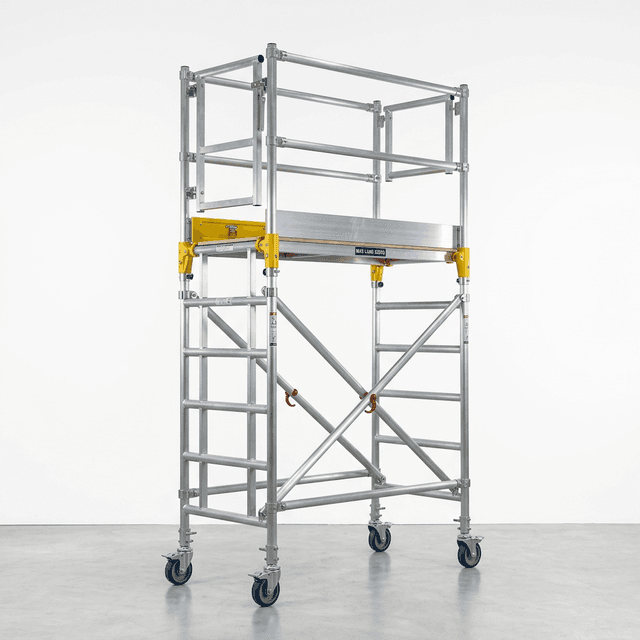
Portable access tower reach bands
The visual break point matters: official low-level podium examples already cover roughly 3 m to 3.45 m safe working height, while higher or outdoor work pushes the buyer toward full mobile towers.
Run the compact tower fit check before reading the full report
Start here when the buyer brief uses podium step ladder, aluminum podium steps, aluminium step podium scaffolding, aluminium podium steps, aluminum painters scaffolding, adjustable work platform ladder, 2 step / 3 step podium ladder, portable aluminium scaffolding, aluminium portable scaffold, or aluminium / aluminum folding scaffold language. The tool gives a fast supported-fit or manual-review route before you consume the deeper evidence layer.
Input boundary for this route
Enter approximate working height as a whole-meter value. Direct package outputs are supported for indoor 3-6 m only on this compact foldable family.
Outdoor requests, unknown site conditions, or higher-reach values will switch to manual review and show the next best route immediately.
Live package map behind this route
This table is the page's own decision evidence. It exposes the foldable-family rule matrix the selector uses on this route, instead of hiding the logic behind generic product copy.
| Working height | Indicative platform height | Extension frames | Platforms | Stabilizers | Why it matters |
|---|---|---|---|---|---|
| 3 m indoor | 1 m | Base-only format | 1 pc | Usually not included | Keeps the route in low-level indoor access territory. |
| 4 m indoor | 2 m | 1 set | 1 pc | Usually not included | Bridge band where podium language starts to give way to tower logic. |
| 5 m indoor | 3 m | 2 sets | 2 pcs | 1 set | Strongest compact-tower fit for repeated indoor maintenance work. |
| 6 m indoor | 4 m | 3 sets | 2 pcs | 1 set | Top supported foldable package before manual-review pressure rises. |
Outdoor requests or working heights outside 3-6 m are not forced into a package. On this route they switch to manual review and send the buyer toward a wider tower family or direct review instead.
The short answer before the long answer
These conclusions are the bridge between the tool output and the research layer. They tell you when a podium step ladder, aluminum podium steps, aluminium step podium scaffolding, aluminium podium steps, aluminum painters scaffolding, or adjustable work platform ladder is still enough, when a 2 / 3 step podium ladder has already outgrown that band, when a 1 man scaffold tower is the better fit, and when the category is already wrong.
Suitability map
What this research round adds beyond the first draft
Stage1b on this route is not a rewrite pass. It adds decision triggers that were missing or under-evidenced in the earlier page: task duration, UK legal equipment-selection factors, WorkSafe Victoria ladder red flags, balcony and raised-area limits, OSHA’s podium-ladder classification interpretation, the US split between wheeled ladder platforms and mobile scaffolds, painter-subtype boundaries across mobile / ladder-jack / pump-jack workflows, the difference between ladder ratings and scaffold duty classes, public duty tables that do not perfectly match line-for-line, electrical no-go boundaries for aluminium towers, occupied-movement boundary differences, cross-market inspection cadence differences, and FY2025 federal enforcement ranking updates with explicit scope limits.
Latest outcome and enforcement signals (with scope limits)
These rows add current cross-market injury and enforcement signals so buyers can calibrate consequence severity without pretending that national datasets provide model-level podium or compact-tower failure rates.
| Market dataset | Latest signal | Decision impact | Boundary / limitation | Source timing |
|---|---|---|---|---|
| Australia (Safe Work Australia, 2025 release) | 188 worker traumatic-injury fatalities in 2024; falls from height 24 deaths (13%); 146,700 serious claims in 2023-24p. | Treat fall-exposure control as a first-pass requirement even when the search phrase starts at low-level podium language. | National cross-industry aggregates; does not isolate compact towers or podium models. | Released Oct 16, 2025; checked Apr 11, 2026 |
| Great Britain (HSE annual fatal-injury report) | 124 worker fatalities in 2024/25 (provisional); falls from height remains the leading fatal accident kind; five-year average 38 fall-from-height deaths/year. | Selection should weight setup quality, edge protection, and inspection discipline, not step count shorthand. | RIDDOR scope excludes fatal disease and some transport-system deaths; figures are provisional until July 2026 finalisation. | First published Jul 2, 2025; updated Nov 20, 2025 |
| United States (BLS CFOI + OSHA enforcement) | BLS CFOI 2024: 844 fatal falls/slips/trips, including 370 in construction/extraction. OSHA FY2025 Top 10 keeps ladders #3 and lists scaffolding #6. | Do not collapse wheeled ladder-platform and mobile-scaffold categories in planning or training handoffs. | CFOI is outcome surveillance; Top 10 is citation frequency across federal OSHA inspections, not state-plan universal totals, and the published FY2025 page is rank-based rather than a full citation-count table. | BLS released Feb 19, 2026; OSHA FY2025 list checked May 13, 2026 |
| NSW campaign process signal (SafeWork NSW 2024) | 343 site visits; 95% had inspection within 30 days; 27% had no written confirmation; 23% had unlicensed scaffold modification; mobile scaffolds appeared on 17% of sites. | Treat paperwork control and alteration control as first-order selection risks once work crosses scaffold governance. | Campaign data is highly useful for process risk, but mobile scaffolds were a minority of inspected setups. | Published Mar 11, 2025; checked Apr 12, 2026 |
Decision triggers that beat step count
These checks are the fastest way to stop a 3 step podium ladder query from turning into the wrong category choice. Each row is a public-source trigger, not generic copy.
| Trigger buyers miss | What the public source says | Why it changes the answer | Buyer move | Source timing |
|---|---|---|---|---|
| User will stay in one position for more than about 30 minutes | HSE says short duration does not decide the issue on its own, but as a guide a ladder or stepladder task that keeps the user in one position for more than 30 minutes should prompt consideration of alternative equipment. | Long static work is where a larger guarded platform or tower starts to beat simple ladder logic. | Treat the 3-step phrase as a search entry point only, then test podium or compact tower options. | HSE FAQ updated Nov 18, 2024 |
| Selection ignores duration/frequency, rescue, and consequence checks | UK Work at Height Regulations 2005 require equipment selection to prioritise collective protection and account for fall consequence, duration and frequency, plus evacuation and rescue needs. The same framework limits ladder use to low-risk and short-duration situations where higher-protection equipment is not justified. | A step-count phrase alone is not a valid selection method when the task has high consequence, frequent repetition, or difficult rescue conditions. | Require the quote to record duration/frequency, rescue access, and formal class before approving podium-ladder or compact-tower fit. | UK SI 2005/735 regs 7 + Sch 6; checked May 13, 2026 |
| Task needs passive protection rather than ladder balance | WorkSafe Victoria places scaffolding or EWPs above ladders in the fall-prevention hierarchy and describes platform stepladders as limited-stability tools with a small working platform. | A guarded ladder format is still not the same thing as a mobile scaffold with a larger working deck and different governance. | Escalate once the task becomes repetitive, two-handed, tool-heavy, or obviously better suited to passive protection. | WorkSafe Victoria checked Dec 3, 2025 |
| Ground, threshold, balcony, or raised-area conditions are uncertain | Safe Work Australia says adjustable-wheel mobile scaffolds should only be used on slopes up to 5 degrees, require secure internal access, and should not be used on balconies or raised areas unless stable and secure or fixed to the structure. | Compact towers stop being a default choice when the supporting surface or movement control is doubtful. | Keep these cases in manual review and confirm site control before approving a portable tower. | SWA tower/mobile scaffold sheet updated Mar 19, 2020 |
| The brief crosses into scaffold-governed work above a 4 m fall risk | Safe Work Australia requires written competent-person confirmation before use for certain scaffolds above a 4 m fall risk and inspections at least every 30 days. SafeWork NSW also notes only licensed scaffolders may erect, alter, or dismantle that class of scaffold. | The decision shifts from simple product selection into inspection, sign-off, and alteration control. | Price in governance overhead and ask who will own handover, inspection, and modification control. | SWA inspection guide Jul 2014 / SafeWork NSW report Mar 11, 2025 |
| Team assumes one fall-protection threshold fits every market | OSHA 1926.451 requires fall protection for scaffold work above 10 ft in many cases, while Safe Work Australia and state guidance use >4 m licensing and governance thresholds for scaffold classes, and HSE construction guidance applies 7-day inspection cadence where a 2 m fall risk exists. | A copied threshold can produce under-scoped controls in one market and over-scoped cost in another. | Map threshold, inspection cadence, and competence/licence duties by destination market before approving the access class. | OSHA 1926.451 checked Apr 12, 2026; SWA duties tool checked Apr 12, 2026; HSE page updated Mar 10, 2026 |
| Buyer is treating headline load rating as the main safety filter | SafeWork NSW found only 3% of inspected sites overloaded, compared with 39% missing rails, 37% incomplete decks, 27% missing written confirmation, and 19% unsafe access or egress. | Public failure data points harder at missing protection and access discipline than at overload. | Do not approve the category on load number alone; confirm guardrails, access, and handover controls. | SafeWork NSW report published Mar 11, 2025 |
Before you trust the step count, clear these ladder-format stop checks
WorkSafe Victoria publishes a ladder checklist that most product pages never surface. If any row below is true, do not let the phrase adjustable work platform ladder or 3 step podium ladder end the decision.
| Red flag | What the public check says | Why it breaks ladder logic | Better next move | Source timing |
|---|---|---|---|---|
| Heavy, awkward, or bulky loads | WorkSafe Victoria’s ladder checklist says to review the hierarchy of control if the task involves handling heavy, awkward, or bulky loads. | Load handling quickly consumes the small platform and balance margin that ladder-format access depends on. | Move the brief into a guarded deck or tower review and confirm payload by formal class. | WorkSafe Victoria reviewed Dec 3, 2025 |
| 2-handed or high-leverage tools | WorkSafe Victoria says never use tools that need 2 hands or a high degree of leverage on a ladder, and its acceptable-use examples stay with one-handed low-torque tools. | Once the task needs both hands or tool reaction control, 3 points of contact and ladder stability are already compromised. | Treat podium, tower, or other passive protection as the default next check, not an optional upsell. | WorkSafe Victoria reviewed Dec 3, 2025 |
| Long static task | HSE says that if a ladder or stepladder task keeps the user in one position for more than about 30 minutes, alternative equipment should be considered. | Fatigue and repeated reach make duration a better boundary than step count. | Review low-level podium versus compact tower based on task duration and tool use, not on the keyword alone. | HSE FAQ updated Nov 18, 2024 |
| Reach beyond the stiles or face away from the ladder | WorkSafe Victoria’s checklist says to review the hierarchy if the task needs someone to reach beyond the ladder stiles or face away from the ladder while working. | Overreach and twisting turn a nominally low-height task into a stability problem. | Use a larger guarded platform or re-set the access method so the worker stays square to the task. | WorkSafe Victoria reviewed Dec 3, 2025 |
| Wet, windy, unstable, or drop-edge set-up | WorkSafe Victoria flags wet or windy weather, unstable surfaces, unsafe nearby objects, or a ladder base near a drop as reasons to re-check the control hierarchy. | The ladder format fails on set-up reliability before brochure height limits even matter. | Stop auto-approval and switch to site-condition review or a different access family. | WorkSafe Victoria reviewed Dec 3, 2025 |
| More than one person, extra PPE, or training gaps | WorkSafe Victoria says never let more than one person on the ladder at the same time, and its checklist asks whether extra training or PPE create extra risk. | Multi-user or high-control work has already moved beyond simple single-person ladder intent. | Confirm whether the job now needs a tower, scaffold governance, or a supervised alternative access plan. | WorkSafe Victoria reviewed Dec 3, 2025 |
How to use this table
One “yes” is enough to stop treating the request as settled by keyword or step count. Clear the red flags first, then let the tool or manual-review path choose the product family.
What buyer language means once it is translated into real access equipment
This is the gap most product pages leave open. Buyers search for phrases like adjustable work platform ladder, adjustable podium steps, aluminium portable scaffold, aluminum painters scaffolding, or 3 step podium ladder, but regulators and official product pages publish rules against formal equipment classes. The table below makes that translation explicit so the quote starts in the right category.
| Buyer phrase | What public sources actually define | Likely formal class | Risk if misread | What to confirm first |
|---|---|---|---|---|
| aluminum painters scaffolding | OSHA sources split supported scaffolds into formal classes including mobile scaffolds, ladder-jack scaffolds, and pump-jack scaffolds. They do not define one universal “painters scaffolding” class. | Often mobile scaffold intent indoors; can also map to ladder-jack or pump-jack workflows depending on facade layout and setup method. | Treating all painter-language briefs as foldable mobile towers can miss subtype-specific height, load, bracing, and movement limits. | Confirm formal subtype first (mobile / ladder-jack / pump-jack), then confirm intended load, push/movement assumptions, and maximum working height before quoting. |
| aluminum podium steps | Public guidance and official product pages on this route describe platform stepladders, low-level work podiums, and tower/mobile scaffolds. They do not define one universal “aluminum podium steps” class. | Usually a low-level podium or platform stepladder starting point; sometimes already a compact mobile scaffold brief. | Treating the US spelling as a fixed spec can hide deck-size, duty, and market-rule checks that still decide whether podium or tower is the right category. | Confirm formal class, platform height, working-height basis, and destination-market rule set before approving the quote. |
| aluminium podium steps | Public guidance and official product pages on this route describe platform stepladders, low-level work podiums, and tower/mobile scaffolds. They do not define one universal “aluminium podium steps” class. | Usually a low-level podium or platform stepladder starting point; sometimes already a compact mobile scaffold brief. | Treating the phrase as a fixed spec can hide deck-size, duty, and market-rule checks that still decide whether podium or tower is the right category. | Confirm formal class, platform height, working-height basis, and destination-market rule set before approving the quote. |
| adjustable work platform ladder | Public guidance on this route talks about platform stepladders, low-level work platforms or podiums, and tower/mobile scaffolds. It does not publish one universal “adjustable work platform ladder” equipment class. | Usually platform stepladder or low-level work platform/podium; sometimes already a compact mobile scaffold brief. | Treating the alias as proof of a fixed deck size, reach band, or scaffold-grade platform before the formal equipment class is confirmed. | Clarify whether the quote is for a platform stepladder, low-level podium, or mobile scaffold, and ask for both platform-height and working-height basis. |
| adjustable podium steps | The sources on this page define platform stepladders, low-level work podiums, and tower/mobile scaffolds. They do not define an “adjustable podium steps” class. | Usually platform stepladder or low-level podium; sometimes the real fit is already a compact mobile scaffold. | Treating “adjustable” as proof of a scaffold-grade deck or assuming every model uses the same reach and guardrail format. | State whether the quote is for a ladder, a BS 8620-style podium, or a mobile scaffold, and give both platform height and working-height basis. |
| 2 step / 3 step podium ladder | Public guidance focuses on duration, stability, and hierarchy of control; product pages publish model-specific height bands. Step count is still search shorthand, not a universal specification. | Low-level ladder or podium starting point, not a guaranteed separate equipment class. | Assuming step count alone fixes working height, duty rating, or inspection burden. | Confirm low-risk or short-duration fit, platform height, deck size, and whether the task still stays with one person. |
| podium ladder (US construction wording) | OSHA’s interpretation letter says a podium-ladder device with an elevated working platform can meet the scaffold definition in 29 CFR 1926.450(b), so Subpart L applies rather than Subpart X, with mobile-scaffold clauses added where casters are used. | Construction scaffold class in many podium-ladder layouts, not automatically a ladder-only class. | Treating it as ladder-only can miss scaffold movement, inspection, and supervision requirements in US construction projects. | For US work, confirm whether the device is being managed under Subpart L and whether caster-equipped operation triggers 1926.452(w) controls. |
| portable access tower | Regulator sources describe mobile scaffolds and towers in terms of trapdoor access, guardrails, stabilisers, inspection, and site-condition rules. | Mobile scaffold / access tower. | Missing slope, balcony, wind, or internal-access limits and underpricing governance overhead. | Confirm site conditions, trapdoor or ladder access, stabilisers, inspection cadence, and whether the brief crosses the 4 m fall-risk boundary. |
| aluminium portable scaffold | Public market listings use this phrase across low-level folding platforms and compact mobile towers, while regulator sources classify controls by formal equipment type instead of one universal “aluminium portable scaffold” class. | Usually compact portable/mobile scaffold intent; sometimes still a low-level platform brief. | Treating the phrase as guaranteed compact-tower fit can skip height-basis, outdoor, and market-governance checks. | Confirm target working height, indoor/outdoor exposure, and whether the quote class is low-level platform, podium, or mobile scaffold under destination rules. |
| 1 man scaffold tower | Official product pages publish compact one-person tower examples, but regulator sources do not define one universal “one-man” class. | Compact mobile tower format; still model-specific. | Treating a marketing label as proof of single-person assembly, uniform folded size, or enough deck for tools and material. | Request the exact model, assembly method, folded transport size, and whether the task still fits a single-user deck. |
Aluminum podium steps procurement check
The US spelling is useful as search language, but it still has to be converted into a formal equipment class before a safe quote can be approved. Updated May 28, 2026; public evidence gaps remain marked as no reliable public data rather than inferred into a universal product rule.
| Decision point | Public evidence | Cannot assume | Buyer action | Source timing |
|---|---|---|---|---|
| Is it a formal equipment class? | OSHA has a construction interpretation path for podium ladders, while WorkSafe Victoria, HSE, PASMA, and BoSS use terms such as platform stepladders, low-level work platforms or podiums, and mobile scaffold/tower. | "Aluminum podium steps" is not a universal public class with one fixed platform height, deck size, payload, or inspection rule. | Ask the supplier to state the formal class first: platform stepladder, low-level podium, mobile ladder stand/platform, or mobile scaffold. | OSHA letter Dec 10, 2007; WorkSafe Victoria reviewed Dec 3, 2025; PASMA guide revised Mar 9, 2021; BoSS page checked May 28, 2026 |
| Is the job still low-risk, short-duration access? | HSE allows ladders and stepladders for low-risk, short-duration work after risk assessment and says work from one position for more than about 30 minutes should prompt alternative equipment review. | A 2-step or 3-step label does not prove the task is short enough, stable enough, or light enough for ladder-format access. | Record task duration, tool use, reach direction, and whether the worker needs two hands before approving podium or ladder-platform fit. | HSE FAQ updated Nov 18, 2024; checked May 28, 2026 |
| Does the wheeled format change the rule set? | OSHA 1910.23 covers mobile ladder stands/platforms with 4:1 stability logic and no occupied movement; OSHA 1926.452 treats mobile scaffolds separately and only allows rider movement under strict conditions. | Wheels do not automatically make a low-level podium behave like a mobile scaffold, and they do not automatically permit moving the unit with a worker on it. | Confirm caster use, occupied-movement assumptions, slope/level surface, brakes, and destination-market rule set before quote approval. | OSHA 1910.23 amended Dec 17, 2019; OSHA 1926.452 amended Feb 18, 2020; checked May 28, 2026 |
| Has the brief crossed into scaffold governance? | Safe Work Australia says tower/mobile scaffold work can require a licensed scaffolder where a person or object could fall more than 4 m, and its inspection guide requires written confirmation and at least 30-day inspection for certain >4 m fall-risk scaffolds. | A compact aluminum podium phrase does not remove licence, written handover, or inspection duties once the actual setup crosses scaffold thresholds. | For Australia, capture fall distance, platform height, adjacent excavations or edges, handover owner, and inspection cadence before dispatch. | SWA tower/mobile sheet updated Mar 19, 2020; SWA inspection guide Jul 2014; checked May 28, 2026 |
| What remains public-evidence limited? | Official sources provide regulator boundaries and model examples, but public pages do not publish a cross-brand benchmark for every podium SKU, folded size, accessory pack, landed price, or incident rate. | There is no reliable public model-level dataset proving one generic "aluminum podium steps" format is safer, cheaper, or more compact across brands. | Treat price, folded size, accessory pack, maintenance history, and fleet incident record as quote-stage due diligence for the exact model. | Evidence gap reviewed May 28, 2026; no reliable comparable public dataset found |
Inference boundary
The conclusion that “adjustable work platform ladder” and “adjustable podium steps” are buyer shorthand, not formal public equipment classes, is an inference from source terminology. The cited public sources define platform stepladders, low-level work platforms or podiums, and tower/mobile scaffolds, but none of them publishes a universal class for either phrase.
Do not confuse a 2.5 m standards boundary with a 2.5 m user job
One of the biggest content gaps on this topic is that public pages mix standard editions and height bases. This is the shortest way to understand why a buyer can see conflicting answers online and still have all of them be partially true in context.
What changes when the same brief is tested against Australian regulator guidance
This page started with UK and manufacturer evidence, but the keyword geography is Australian. The practical difference is that public Australian guidance makes the ladder-versus-scaffold boundary, the site-condition test, and the inspection overhead more explicit.
| Decision check | What the regulator says | Good fit when | Escalate when | Source timing |
|---|---|---|---|---|
| Ladder / platform-ladder boundary | WorkSafe Victoria keeps scaffolding or EWPs above ladder controls in the hierarchy, says ladders are for simple and short-duration tasks, and says platform stepladders still provide limited stability and a small working platform. | Low-level, light-tool, short-duration work where the user stays inside ladder logic. | The task becomes repetitive, two-handed, material-heavy, or clearly needs passive protection and deck space. | WorkSafe Victoria reviewed Dec 3, 2025 |
| Portable/mobile scaffold setup conditions | Safe Work Australia says mobile scaffolds need firm level ground, slope no more than 5 degrees when adjustable wheels are used, a secure internal ladder with a protected opening, wheel WLL markings with brakes locked before erection continues, and no work from balconies or raised areas unless the scaffold is stable and secure or fixed to the structure. | The site can support proper wheel setup, internal access, guarded working, and controlled movement. | Ground, balcony, threshold, wind, or clearance conditions make compact setup assumptions unreliable, or the scaffold cannot be secured against movement. | SWA tower/mobile scaffold sheet updated Mar 19, 2020 |
| Licensing, handover, and inspection overhead | Safe Work Australia says a fall risk above 4 m can require a licensed scaffolder, written competent-person confirmation before use, and inspections at least every 30 days for that class. SafeWork NSW then found 27% of inspected sites missing written confirmation. | The buyer can manage handover paperwork, alteration control, and recurring inspection discipline. | The team wants a simple product purchase but cannot absorb scaffold governance and sign-off duties. | SWA inspection guide Mar 19, 2020; SafeWork NSW report published Mar 11, 2025 |
Aluminium folding scaffold decisions that break first under electrical and market-rule mismatch
This is the highest-impact gap for buyers using the phrase aluminium folding scaffold. The height can look correct while the electrical controls, no-go distance, or inspection cadence is still wrong for the destination market.
| Boundary check | AU / UK public signal | US public signal | Risk if misread | Minimum buyer action | Source timing |
|---|---|---|---|---|---|
| Metal scaffold near overhead powerlines | WorkSafe Victoria requires scaffolding work to stay outside no-go zones (5 m below, 4.6 m horizontal) unless utility controls are formally in place, and says spotter-only controls are not enough inside the no-go zone. | OSHA 1926.451 requires minimum clearance from power lines during erection, movement, and use. Typical minimums are 10 ft for uninsulated lines below 50 kV, with larger distances at higher voltage. | Treating one country distance as universal can create a serious electrocution exposure even when the tower choice looked correct. | Confirm destination jurisdiction, utility permit-to-work path, and line insulation/voltage before approving an aluminium tower near power assets. | Victoria standard Edition 1 Dec 2024; OSHA 1926.451 checked Apr 9, 2026 |
| Aluminium wording versus electrical suitability | WorkSafe Victoria says non-conductive ladders such as fibreglass should be used where electrical hazards exist. | OSHA 1926.1053 says ladders with conductive side rails must not be used where the employee or ladder could contact exposed energized electrical equipment. | Using “aluminium folding scaffold” as a purchase keyword without an electrical-risk check can approve the wrong material class. | Capture electrical proximity in the first brief and require explicit non-conductive method/material confirmation where needed. | WorkSafe Victoria reviewed Dec 3, 2025; OSHA 1926.1053 checked Apr 9, 2026 |
| Storm/high-wind operation | HSE and Safe Work Australia both treat windy conditions as a stop condition for normal tower/mobile-scaffold use. | OSHA 1926.451 blocks scaffold work during storms or high winds unless a competent person decides it is safe and workers are protected from wind hazards. | An indoor-compatible quote can fail outdoors if wind and weather controls are not defined before dispatch. | Lock wind and weather stop-rules to the model manual and site method statement before approving field use. | HSE reviewed Mar 27, 2026; SWA sheet updated Mar 19, 2020; OSHA 1926.451 checked Apr 9, 2026 |
| Occupied movement while on wheels | HSE says tower scaffolds should not be moved with people or materials on the platform. Safe Work Australia also expects wheel brakes to stay locked before erection continues and no movement in windy conditions. | OSHA 1910.23 says mobile ladder stands or platforms must not move while an employee is on them. OSHA 1926.452 allows riding on mobile scaffolds only under strict controls, including a surface within 3 degrees of level and a movement ratio of 2:1 or less unless designed and tested otherwise. | Treating every wheeled access unit as move-with-operator equipment can create immediate fall risk and non-compliant site behaviour. | Confirm formal class first (ladder stand/platform vs mobile scaffold), then lock movement rules to jurisdiction and the exact model manual. | HSE page updated Mar 10, 2026; SWA sheet updated Mar 19, 2020; OSHA 1910.23 / 1926.452 checked Apr 12, 2026 |
| Inspection and licence cadence | HSE requires inspection after assembly and then at intervals not exceeding 7 days on construction sites. Safe Work Australia and WorkSafe Queensland both keep the >4 m scaffolding licence threshold visible, with SWA also calling for written confirmation and at least 30-day inspection cadence for that class. | OSHA 1926.451 requires competent-person inspection for visible defects before each work shift and after events that could affect structural integrity. | Reusing one inspection rhythm across markets under-prices supervision and increases non-compliance risk. | Define inspection owner, cadence, and licence class by destination market before confirming delivery and start date. | HSE reviewed Mar 27, 2026; SWA duties tool checked Apr 9, 2026; WorkSafe QLD checked Apr 9, 2026; OSHA 1926.451 checked Apr 9, 2026 |
The Australian duty tables buyers actually need before saying “this tower will do”
Public guidance is useful here, but it is not numerically identical across sources. Safe Work Australia and WorkSafe Victoria align on the load classes, then diverge on some public width details. This is exactly why a quote should name the duty table it is using instead of throwing around one load number in isolation.
| Duty class | Safe Work Australia public guide | WorkSafe Victoria 2024 public guide | What it changes in practice |
|---|---|---|---|
| Light duty | Up to 225 kg per bay; about 450 mm wide; example given as one 80 kg worker + 145 kg tools, or two 80 kg workers + 65 kg tools. | Up to 225 kg per platform per bay including a 120 kg concentrated load; at least 450 mm wide. | Good for painting, electrical, and other light work, but the payload margin disappears quickly once extra tools or a second person arrive. |
| Medium duty | Up to 450 kg per bay; about 900 mm wide; general trades work. | Up to 450 kg per platform per bay including a 150 kg concentrated load; at least 675 mm wide. | This is already broader than simple podium logic. If the brief truly needs medium-duty loading, compact one-person formats are usually the wrong starting point. |
| Heavy duty | Up to 675 kg per bay; about 1000 mm wide; bricklaying, concreting, demolition, and other heavy-load work. | Up to 675 kg per platform per bay including a 200 kg concentrated load; at least 900 mm wide. | Heavy-duty work sits well outside portable podium or one-man tower intent and should move straight into scaffold planning. |
| Special duty | Designated allowable load as designed. | Designated load as designed with at least light-duty rating and clear access of 450 mm for people/tools or 675 mm for people/materials. | This is a design-and-quote path, not an off-the-shelf category shortcut. |
Need the right tower path, not just the right SKU?
If the comparison leaves the compact route looking close but not certain, send the brief now or jump into the wider planner before the quote drifts into the wrong tower family.
If the compact route still looks close but not certain, send the podium or tower brief directly to this inbox before the quote drifts.
What buyers should visually confirm before approving a compact tower
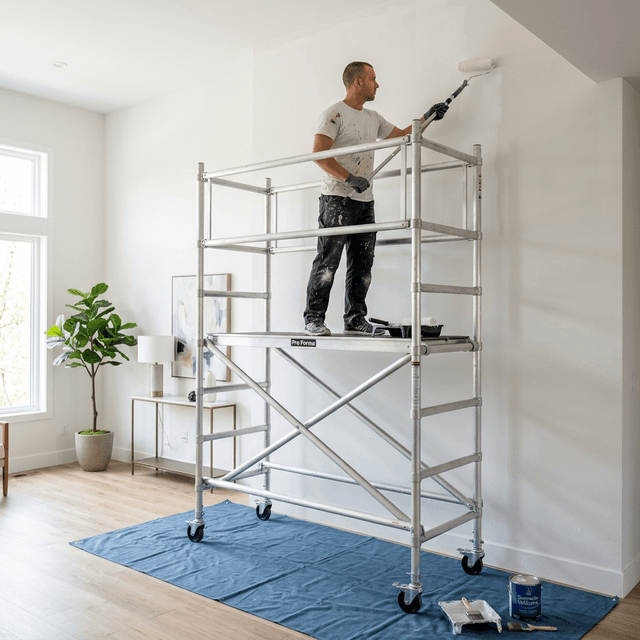
Application image for decorating and short-cycle maintenance buyers.
A compact tower only helps if it actually moves through finished interiors and keeps setup short enough for repeat maintenance work.
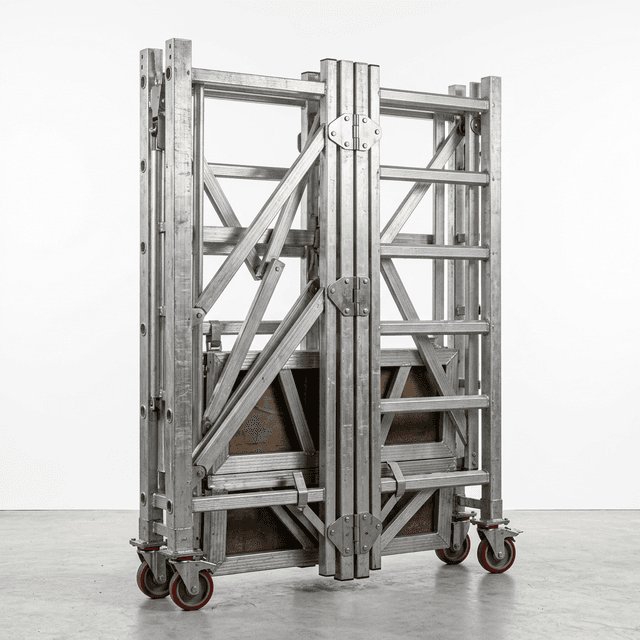
Portable format view for buyers prioritizing storage and movement convenience.
One-person towers still need enough usable platform area for drills, paint, fixings, or inspection kits. That is the step up from ladder logic.
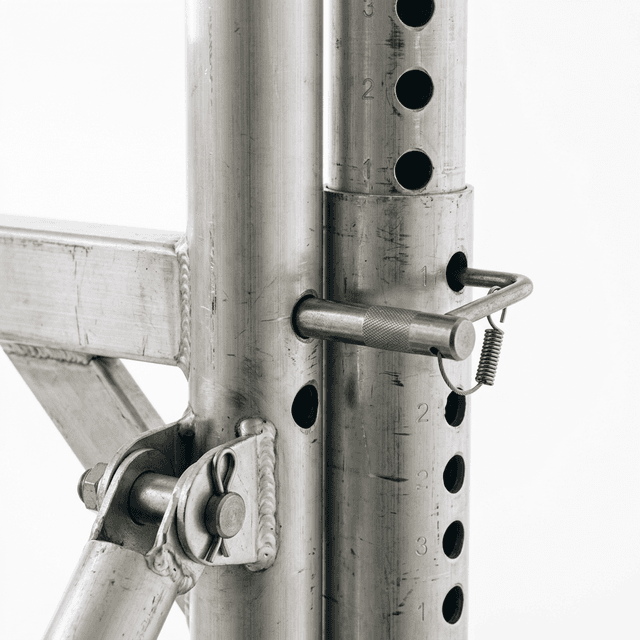
Height-adjustable view supports inquiries around working range and flexibility.
At 5-6 m working height, extension modules and stabiliser requirements matter more than the “one man tower” label on its own.
How the page turns a keyword into a usable selection method
The portable access tower decision needs two evidence layers at once: official guidance for safety boundaries, and public market examples for compactness, trolley size, and practical one-man tower ranges.
1. Lock the family to portable / foldable
The tool keeps the family fixed to the compact foldable tower path so the result is aligned with portable access tower intent instead of drifting into wider towers.
2. Translate working height into package logic
The recommendation engine treats working height as an approximate reach target and then maps it to an indicative foldable package by platform-height assumptions.
3. Force manual review at the edge
Outdoor requests, unsupported heights, or unclear combinations do not get a fake match. The interface deliberately falls back to manual review when the standard package logic runs out.
4. Keep the handoff usable
Every output state ends with a next step: open the email draft, copy the summary, or switch into a wider-tower route if the compact family is no longer credible.
Official safety sources are strongest on competence, moving, stabilisers, and height classes. Supplier pages are strongest on folded size, trolley format, and transport practicality.
What the public sources actually support
Base source snapshot reviewed Mar 27, 2026. Supplemental cross-market additions checked May 28, 2026. Each card separates what the source is good for from what still depends on the exact brand, model, standard edition, or instruction manual.
What public sources still do not settle
This section is deliberately blunt. Public regulator and manufacturer pages are strong on category boundaries and safety conditions. They are weak on cross-brand price, transport standardisation, and exact paid-standard clause wording. Those items stay marked as open checks until the quote and manual are on the table.
Updated May 28, 2026. Items below stay open unless the source is public, current, and directly comparable.
| Topic | Publicly confirmed | Still unconfirmed | Buyer action | Status |
|---|---|---|---|---|
| Exact Australian standard clauses | Regulator guidance points buyers to AS 1892.1:2018 for workplace ladders and to AS/NZS 4576 plus AS 1576/1577 for scaffolding. | Public regulator pages do not reproduce the full paid-standard clause text or every market-specific amendment path. | Check the subscribed standard or ask the supplier for the exact compliance declaration before writing a specification. | Needs paid-standard check |
| Cross-market naming equivalence | WorkSafe Victoria uses ladder / platform stepladder / scaffold language, while OSHA separately regulates mobile ladder stands/platforms and mobile scaffolds. | There is no reliable public universal map that says every “adjustable work platform ladder” or wheeled podium phrase lands in the same formal class across Australia, the UK, and the US. | Ask for the destination market, the formal equipment class, and the exact regulation or standard basis before approving the product family. | Destination-market confirmation needed |
| Meaning of "aluminum podium steps" | Public guidance and official product pages on this route talk about platform stepladders, low-level work podiums, and tower/mobile scaffolds. | There is no reliable public regulator or cross-brand source here that defines “aluminum podium steps” as one universal equipment class with fixed reach, deck size, or governance rules. | Ask the supplier to name the formal product class, platform height, working-height convention, and duty rating before approving the category. | Alias / format confirmation needed |
| Meaning of "adjustable podium steps" | Public guidance and official product pages on this route talk about platform stepladders, low-level work podiums, and tower/mobile scaffolds. | There is no reliable public regulator or cross-brand source here that defines “adjustable podium steps” as one universal equipment class with fixed reach, deck size, or governance rules. | Ask the supplier to name the formal product class, platform height, working-height convention, and duty rating before approving the category. | Alias / format confirmation needed |
| Universal "3 step podium ladder" definition | Public regulator and official product sources describe model-specific platform height, working-height convention, load, and format, but they do not publish one universal 3-step podium class. | There is no reliable public rule that says every "3 step podium ladder" means the same reach, deck size, or regulatory category across brands and markets. | Ask for the exact product format, platform height, working-height basis, duty rating, and whether the supplier is quoting a ladder, a podium, or a mobile scaffold. | No universal public definition |
| One Australia-wide duty table | Safe Work Australia and WorkSafe Victoria both publish light / medium / heavy scaffold duty guidance, but their public width tables are not identical. | There is no single public table that overrides jurisdiction-specific guidance, manufacturer instructions, and the exact scaffold system being quoted. | Ask which jurisdiction and duty table the quote is using, then confirm clear platform width, per-bay live load, and concentrated load. | Jurisdiction dependent |
| Cross-brand folded-size benchmark | BoSS QuickPod, BoSS SOLO 700, and ZARGES Teletower publish different size fields and transport formats. | There is no reliable public benchmark that covers every “1 man scaffold tower” or portable access tower on one universal formula. | Ask for folded dimensions, trolley format, and doorway or van-fit evidence for the exact model. | No reliable public benchmark |
| Cross-brand price benchmark in Australia | Regulator sources do not publish price guidance, and official product pages are inconsistent on public pricing and accessory packs. | There is no reliable public Australia-wide benchmark for landed price once freight, accessories, and compliance paperwork are included. | Treat price as quote-only and request the exact accessory pack, freight basis, and documentation scope. | Quote-only |
| Universal payload rule across podium and tower formats | WorkSafe Victoria requires workplace ladders to meet industrial-grade requirements with a minimum 120 kg safe working load, while BoSS QuickPod publishes a 150 kg max load. | No single public payload number safely generalises across podiums, telescopic towers, and one-man towers. | Use the exact manual and duty rating for the chosen model, not the category label alone. | Model-specific only |
| Cross-market electrical no-go distance | WorkSafe Victoria and OSHA both publish explicit clearance expectations for scaffold work near power lines. | There is no reliable public single global distance rule that safely transfers between Australia, the UK, and the US without voltage and jurisdiction context. | Confirm destination market, line voltage/insulation basis, and utility permit-to-work controls before approving aluminium scaffold use near energized assets. | Jurisdiction-specific control required |
| Universal inspection cadence for folding towers | OSHA, HSE, and Safe Work Australia all require recurring scaffold checks, but they publish different cadence logic (shift-based, 7-day construction intervals, or >4 m class governance). | There is no reliable public one-size cadence that is automatically compliant across all destination markets and work classes. | Name the market, class, licence threshold, and inspection owner in the quote package before dispatch. | Cadence must be market-locked |
| Mobile-tower-specific defect benchmark from public inspections | SafeWork NSW reports 95% inspected within 30 days, 27% missing written confirmation, and 23% unlicensed modifications across the 2024 campaign. | Only 17% of inspected NSW sites had mobile scaffolds, so public campaign data does not provide a clean mobile-tower-only defect rate. | Use the campaign as a process-risk signal, then add model-specific mobile tower audits and handover checks before approval. | Directional evidence only |
| FY2025 OSHA Top 10 citation volumes by standard | OSHA’s FY2025 Top 10 page explicitly ranks construction ladders at #3 and construction scaffolding at #6 across federal inspections. | The public FY2025 summary page is rank-first and does not provide a clean per-standard citation-count table in the same view. | Use the rank signal for enforcement prioritisation, then pull NAICS-specific citation totals separately when you need numeric volume planning. | Rank-level signal only |
| Subtype incident rates for painter scaffold classes | OSHA publicly separates mobile scaffolds, ladder-jack scaffolds, and pump-jack scaffolds in 1926.452 and in eTool guidance. | No reliable current public dataset on this route provides a clean incident-rate comparison by subtype (mobile vs ladder-jack vs pump-jack) for painter use cases. | Treat subtype safety as a project due-diligence item: request the specific method statement, recent inspection records, and incident history for the exact scaffold subtype and crew workflow. | No reliable public subtype-rate dataset |
| Model-level incident rates for podium vs compact tower formats | Safe Work Australia, HSE, and BLS publish reliable national injury/fatality trends and mechanisms. | There is no reliable public cross-brand dataset that attributes incident rates to specific podium SKUs, foldable compact towers, or one-man tower models in a directly comparable way. | Treat product-level safety performance as a quote-stage due-diligence item: request maintenance logs, inspection history, and incident records for the exact fleet/model. | No reliable public model-level dataset |
Portable access tower versus the nearby alternatives
The buying mistake is usually not choosing the wrong SKU. It is choosing the wrong access category. This table is the fastest way to see when a 2 step or 3 step podium ladder brief should stay low-level and when the compact tower cluster stops making sense.
Compactness is the reason to buy a one-man tower at all. When the transport or doorway advantage stops mattering, the wider tower paths usually become better value.
| Access format | Typical range | Compactness | Best first when | Usually wrong when | Evidence base |
|---|---|---|---|---|---|
| Podium / low-level work platform | 2.95-3.45 m safe working height on BoSS QuickPod 1000/1500 | Very high; 550 x 590 mm platform, compact folded launch example | Low-level tasks that still need guardrails and frequent short moves | Jobs that need a longer deck, greater reach, or tower-style extension logic | BoSS QuickPod official |
| Telescopic portable tower | Up to 4.0 m working height | Very high; folds to 0.8 x 0.41 x 1.18 m, 59.9 kg | Single-technician van stock and ultra-tight transport limits | Higher reach, longer platforms, or more deck space | ZARGES official |
| One-man quick-build tower | 4.2-6.2 m safe working height | High; 0.7 x 1.3 m platform, single-person build claim | Solo indoor access work, stairwell/confined-space tasks, and quick setup | Outdoor exposure, higher reach, or wider / material-heavy work | BoSS SOLO 700 official |
| Full mobile access tower | EN1004 planning envelope up to 12 m indoors / 8 m outdoors | Lower; modular footprint and more components | Higher work, larger crews, wider decks, and clearer standards-led planning | Tight storage, one-person quick deployment, or short corridor moves | PASMA EN1004 guide |
If the buyer says “painters scaffolding”, confirm the subtype before quoting
This is the biggest false-equivalence risk behind aluminum painters scaffolding. OSHA separates mobile, ladder-jack, and pump-jack scaffolds with different numeric boundaries and movement/bracing assumptions.
| Supported-scaffold subtype | Where it typically appears | Public numeric boundaries | Constraint buyers miss | Route impact | Source timing |
|---|---|---|---|---|---|
| Mobile scaffold (supported) | OSHA eTool says this subtype is common for light-duty work such as painting and plastering and is used where workers must move often. | Rider-allowed movement in 1926.452 requires controls including speed no more than 1 ft/s and movement force applied near the base (not above 5 ft). | Movement with riders is conditional, not default; slope, ratio, and control assumptions must be met. | Closest match for this page when the task truly stays in compact mobile-tower logic. | OSHA eTool + 1926.452 checked May 20, 2026 |
| Ladder-jack scaffold | Common in linear wall-work conversations where brackets run off ladders instead of tower frames. | 1926.452 limits ladder-jack scaffolds to 20 ft height and maximum intended load of 25 psf, with no more than two workers on one scaffold. | Height and platform-loading rules are tight compared with tower workflows. | Do not auto-map to foldable tower; move to subtype-specific review when this format is requested. | OSHA 1926.452 checked May 20, 2026 |
| Pump-jack scaffold | Frequently used in painter/contractor language for vertical facade progress on pole-supported setups. | 1926.452 limits maximum intended load to 500 lb and requires rigid triangular bracing to the structure at top, bottom, and intervals not exceeding 10 ft. | Bracing and pole setup govern feasibility; this is not a portable indoor foldable-tower shortcut. | Treat as outside default compact foldable path unless the workflow is explicitly engineered around pump-jack controls. | OSHA 1926.452 + eTool checked May 20, 2026 |
Evidence limit
As of May 20, 2026, this page has no reliable public dataset that compares incident rates across mobile, ladder-jack, and pump-jack painter workflows on a like-for-like basis.
Official product examples reviewed Mar 27, 2026
These rows are model-specific examples, not category-wide promises. They are here to show the actual public data bands behind podium, ultra-compact tower, and one-person tower language.
| Category | Official example | Published height data | Published physical data | Use it to decide | Still confirm |
|---|---|---|---|---|---|
| Low-level mobile podium | BoSS QuickPod 1000 / 1500 | 2.95 m / 3.45 m safe working height | 550 x 590 mm platform; 150 kg max load; Jun 24, 2024 launch note adds 28 kg and 1.94 x 0.85 x 0.27 m folded size | Benchmarking low-level jobs that still need guardrails and frequent repositioning | Exact toe-board, accessory, and market-specific configuration before ordering |
| Ultra-compact telescopic tower | ZARGES Teletower | Up to 4.0 m working height; 1.1-2.0 m platform height | 0.8 x 0.41 x 1.18 m folded; 59.9 kg | Checking whether transport and storage limits justify choosing telescopic compactness over larger deck space | Payload, usable deck area, and manual-specific setup limits for the exact variant |
| One-person compact tower | BoSS SOLO 700 / 700 Series | 4.2-6.2 m safe working height; 2.2-4.2 m platform height | 0.7 m tower width; 1.3 m platform length | Anchoring the real compact-tower band that usually matches 1-man tower intent | Folded transport size, accessory pack, and current instruction manual for the chosen model |
Three practical scenarios that keep the category choice honest
The compact tower warnings that actually matter
The point of this section is not to make the page sound cautious. It is to stop a compact tower from being stretched into the wrong job. Public safety guidance is clear on that point.
Related routes to open when the compact tower stops fitting
Questions buyers ask about adjustable work platform ladder, aluminum podium steps, aluminium podium steps, adjustable podium steps, podium step ladder, 2 step / 3 step podium ladder, portable aluminium scaffolding, aluminium portable scaffold, aluminum painters scaffolding, aluminium folding scaffold, and portable access tower fit
Ready to send the podium / tower brief?
Send the working height, indoor/outdoor context, whether the starting brief is for a 2 step podium ladder, 3 step podium ladder, or a tower, one-person or multi-person use, doorway constraints, quantity, and destination market. If the fit is marginal, include the manual-review notes from the tool output in the first message.
Send the working height, use context, starting brief, operator count, doorway constraints, quantity, and destination market to this address.
Need the alias wording on the canonical route?
Keep the phrases aluminum podium steps, aluminium folding scaffold , aluminium portable scaffold , aluminum painters scaffolding and portable aluminium scaffolding on this same URL and jump straight into the tool instead of splitting the cluster into a duplicate route.