
Scaffold Base Jacks: choose the right adjustable base jack for scaffolding
Buyers searching for an adjustable base jack for scaffolding, base jack scaffolding, or for adjustable scaffold legs for sale usually do not need a second keyword page. They need one canonical route that sorts footing, scaffold system, public size signals, and RFQ boundaries before the quote gets vague or unsafe.
This hybrid page handles the tool intent first with a quick checker, then backs the result with public regulator guidance, manufacturer signals, comparison tables, and the uncertainty markers that a serious B2B buyer actually needs.
Need the sale-intent path? Adjustable scaffold legs for sale jumps straight to the checker on this same canonical URL.
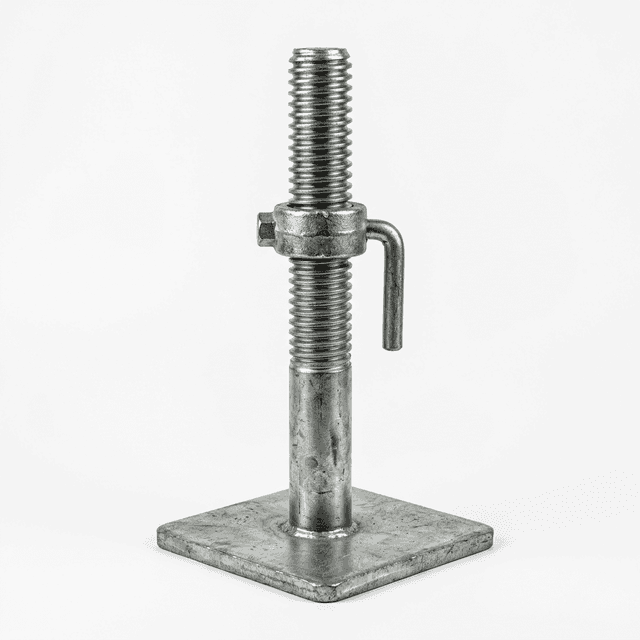
Adjustable-thread detail
Public product pages help compare thread families, but they do not replace the current manual’s approved extension.
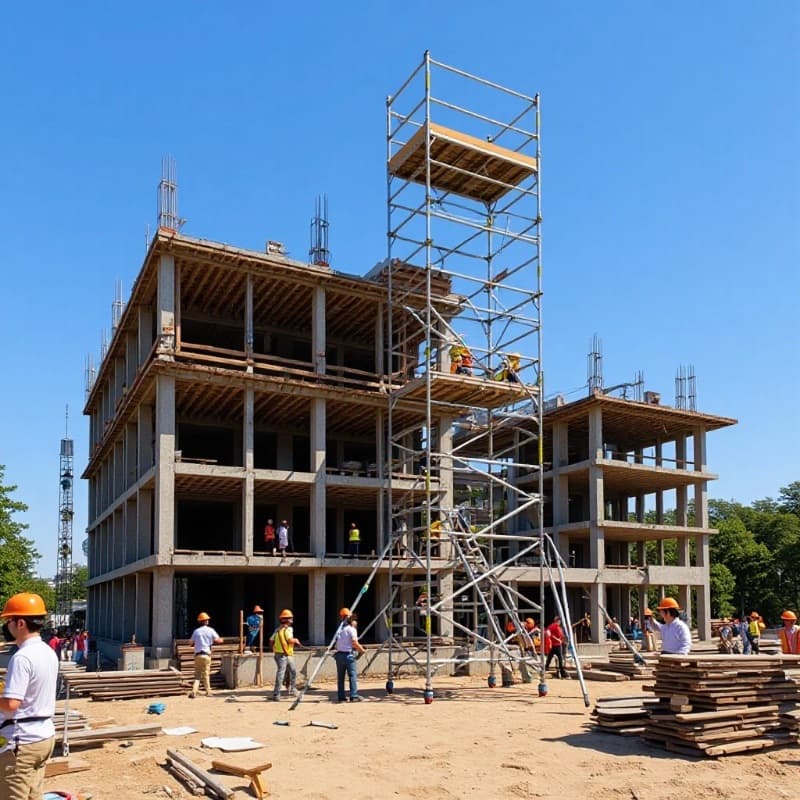
Footing contact point
Base plate and support condition decide whether the threaded adjustment is meaningful or misleading.
Core conclusions, key numbers, and who this route fits
Foundation detail matters more than thread detail at the first decision
The public rules start with level, sound, rigid support. Safe Work Australia adds that the base plate or adjustable base should not overhang the soleboard, while OSHA and HSE both shut down unstable support objects such as loose blocks.
Sources: OSHA 1926.451 scaffold foundations · Safe Work Australia general guide for scaffolds · HSE tower scaffold safety guidance
Duty class helps sort access work from heavier support, but it is not a universal jack capacity number
Safe Work Australia publishes light / medium / heavy duty platform bands at 225, 450, and 675 kg per bay, with concentrated loads of 120, 150, and 200 kg. That is useful for triage, but it does not certify any specific jack or exposed-thread condition.
Sources: Safe Work Australia general guide for scaffolds
Tower-style adjustable legs are a leveling control, not a free height upgrade
On tower routes, the manual decides the actual allowable extension. PASMA’s public code explicitly says adjustable legs should stay on the minimum possible extension, should not be used to gain additional height, and need supplier advice if they still cannot level the base.
Sources: PASMA Operator’s Code of Practice · HSE tower scaffold safety guidance
Replacement orders fail faster on fit and mixed-component assumptions than on thread length
OSHA only allows components from different manufacturers to be mixed when they fit without force and preserve structural integrity. That is why the first RFQ still needs brand, OD, stem style, and material details even when the keyword sounds generic.
Sources: OSHA 1926.451 scaffold foundations · APAC adjustable scaffold base jacks · Bil-Jax leveling jacks · AMCO hollow base jack
Public sizes help frame the RFQ, but they do not certify the usable exposed thread
Published shaft families like 450, 600, 660, or 760 mm are useful for commercial comparison. They are not a substitute for the current manufacturer limit, footing condition, or competent-person review.
Sources: AMCO hollow base jack · PASMA Operator’s Code of Practice
No single cross-brand exposed-thread limit exists in the open sources
Open regulators do not give one universal millimeter limit. The official Layher spindle page instead points buyers back to manufacturer-specific overwind protection markings and EN 12811-1 Annex B load-capability context, so the current manual controls the limit rather than a generic rule of thumb.
Sources: OSHA 1926.451 scaffold foundations · BSI BS EN 12811-1:2003 standard record · Layher scaffolding spindle product record · PASMA Operator’s Code of Practice
Good fit for this page
Escalate from this page when
Not what this page is for
How the checker turns public evidence into a usable next step
The tool is intentionally conservative. It uses public data to narrow the route, then exposes where the page stops and the current manual or competent-person review must take over.
1. Identify the system before the size
A mobile tower, ringlock, Kwikstage, frame scaffold, and shoring post do not share one interchangeable jack route. The checker starts by forcing that distinction.
2. Check the footing load path
The methodology promotes base plates, mud sills, sole boards, and the supporting surface before shaft length because that is where the public regulations start.
3. Use public size bands only as RFQ scaffolding
Public OD and shaft families are useful for comparing buying routes, but not for approving exposed-thread height in service. In the reviewed open sources, there is no single cross-brand maximum exposed-thread number you can safely reuse everywhere.
4. Hand the decision back to the current manual
When the page reaches its confidence limit, it marks the state clearly and forces the next step into supplier, competent-person, or engineering review.
Source map checked on Jul 14, 2026
These are the public sources this page depends on. The notes say exactly what each source is used for so the report layer stays auditable.
OSHA 1926.451 scaffold foundations
Checked Jul 14, 2026
Official U.S. regulation checked Jul 14, 2026. Used for level, sound, rigid footing support, the 4:1 capacity safety factor (supporting 4 times maximum intended load), the ban on unstable support objects, and the mixed-manufacturer / dissimilar-metal boundary.
Open sourceBSI BS EN 12811-1:2003 standard record
Checked Jul 14, 2026
Official BSI standard record checked Jul 14, 2026. Used to identify the current BS EN 12811-1:2003 scaffold scope and performance baseline; detailed base-jack clause checks still require the purchased current standard and the manufacturer manual before approval.
Open sourceSafe Work Australia general guide for scaffolds
Checked Jul 14, 2026
Official Australian guide checked Jul 14, 2026. Used for light / medium / heavy duty platform classes, soleboard and baseplate load distribution, the no-overhang rule at the soleboard edge, and adjustable bases on uneven surfaces.
Open sourcePASMA Operator’s Code of Practice
Checked Jul 14, 2026
Official PASMA code checked Jul 14, 2026. Used for the tower-specific rule that adjustable legs level the tower only, must stay at the minimum possible extension, need supplier advice if they cannot level the base adequately, and require inspection after assembly and at least every 7 days in use.
Open sourceHSE tower scaffold safety guidance
Checked Jul 14, 2026
Official UK HSE guidance checked Jul 14, 2026. Used for firm and level foundation guidance, the ban on bricks or blocks under towers, 7-day inspection cadence, and the rule not to exceed manufacturer recommended tower height.
Open sourceBil-Jax leveling jacks
Checked Jul 14, 2026
Official manufacturer page checked Jul 14, 2026. Used for the public frame-scaffold benchmark of a 24 inch stem with 15 inch adjustment on leveling jacks.
Open sourceAPAC adjustable scaffold base jacks
Checked Jul 14, 2026
Official manufacturer page checked Jul 14, 2026. Used for public OD ranges from 34 mm to 60 mm, the common OD38 ringlock/cuplock signal, OD36 kwikstage signal, OD48 shoring signal, and posted load-test values.
Open sourceAMCO hollow base jack
Checked Jul 14, 2026
Official manufacturer page checked Jul 14, 2026. Used for public hollow-base jack shaft families of 450, 600, 660, and 760 mm with a 150 x 150 mm base plate reference.
Open sourceLayher scaffolding spindle product record
Checked Jul 14, 2026
Official manufacturer page checked Jul 14, 2026. Used to confirm that baseplates and head jacks are manufacturer-specific, use overwind protection markings, and tie spindle cross-section load capability to DIN EN 12811-1 Annex B; it is not used as a universal exposed-thread limit.
Open source| Source | Why it matters here | Link |
|---|---|---|
OSHA 1926.451 scaffold foundations Checked Jul 14, 2026 | Official U.S. regulation checked Jul 14, 2026. Used for level, sound, rigid footing support, the 4:1 capacity safety factor (supporting 4 times maximum intended load), the ban on unstable support objects, and the mixed-manufacturer / dissimilar-metal boundary. | Open source |
BSI BS EN 12811-1:2003 standard record Checked Jul 14, 2026 | Official BSI standard record checked Jul 14, 2026. Used to identify the current BS EN 12811-1:2003 scaffold scope and performance baseline; detailed base-jack clause checks still require the purchased current standard and the manufacturer manual before approval. | Open source |
Safe Work Australia general guide for scaffolds Checked Jul 14, 2026 | Official Australian guide checked Jul 14, 2026. Used for light / medium / heavy duty platform classes, soleboard and baseplate load distribution, the no-overhang rule at the soleboard edge, and adjustable bases on uneven surfaces. | Open source |
PASMA Operator’s Code of Practice Checked Jul 14, 2026 | Official PASMA code checked Jul 14, 2026. Used for the tower-specific rule that adjustable legs level the tower only, must stay at the minimum possible extension, need supplier advice if they cannot level the base adequately, and require inspection after assembly and at least every 7 days in use. | Open source |
HSE tower scaffold safety guidance Checked Jul 14, 2026 | Official UK HSE guidance checked Jul 14, 2026. Used for firm and level foundation guidance, the ban on bricks or blocks under towers, 7-day inspection cadence, and the rule not to exceed manufacturer recommended tower height. | Open source |
Bil-Jax leveling jacks Checked Jul 14, 2026 | Official manufacturer page checked Jul 14, 2026. Used for the public frame-scaffold benchmark of a 24 inch stem with 15 inch adjustment on leveling jacks. | Open source |
APAC adjustable scaffold base jacks Checked Jul 14, 2026 | Official manufacturer page checked Jul 14, 2026. Used for public OD ranges from 34 mm to 60 mm, the common OD38 ringlock/cuplock signal, OD36 kwikstage signal, OD48 shoring signal, and posted load-test values. | Open source |
AMCO hollow base jack Checked Jul 14, 2026 | Official manufacturer page checked Jul 14, 2026. Used for public hollow-base jack shaft families of 450, 600, 660, and 760 mm with a 150 x 150 mm base plate reference. | Open source |
Layher scaffolding spindle product record Checked Jul 14, 2026 | Official manufacturer page checked Jul 14, 2026. Used to confirm that baseplates and head jacks are manufacturer-specific, use overwind protection markings, and tie spindle cross-section load capability to DIN EN 12811-1 Annex B; it is not used as a universal exposed-thread limit. | Open source |
Public regulator layer
Used for footing rules, base plates, sole boards, and the reasons the page does not oversimplify support conditions.
Tower manual boundary
Used to show where tower adjustable legs stop being a generic product question and return to the current instruction manual.
Public product signal
Used for OD and shaft-family comparison only, never as a blanket approval for every scaffold system.
Hard stops and replacement checks the page now makes explicit
This section converts general guidance into source-backed thresholds, plus the details a buyer has to confirm before a replacement base-jack RFQ is actually defensible.
Five public thresholds that should change the buying path
Each row below is tied to a public source checked on Jul 14, 2026, so the operational takeaway stays auditable.
225 / 450 / 675 kg per platform per bay
These Safe Work Australia duty classes help separate ordinary access work from heavier support direction. They classify the working platform, not a universal jack capacity.
Hard stop: If the brief sounds “heavy” but nobody can explain the duty or load path, the page should not stay in a price-only RFQ mode.
Sources: Safe Work Australia general guide for scaffolds
No base plate or adjustable base should overhang the soleboard
Even a correctly sized jack is misused when the bearing surface is narrower than the plate underneath it.
Hard stop: If the soleboard edge is carrying part of the plate, stop the generic quote and redesign the footing package.
Sources: Safe Work Australia general guide for scaffolds
Scaffolds must support 4 times their maximum intended load
A manufacturer’s ultimate breaking-strength test is not the safe working load. The OSHA 4:1 safety factor must be applied before approving the load path.
Hard stop: If the RFQ relies on raw failure loads instead of 4:1 derated working loads, do not approve the duty case.
Sources: OSHA 1926.451 scaffold foundations
Manufacturer-approved engagement and overwind limits must remain visible in the current manual
The official BSI record confirms the EN 12811-1 scaffold performance baseline, while the Layher spindle page shows manufacturer-specific overwind protection and EN 12811-1 Annex B load-capability context. The open sources do not give a universal cross-brand exposed-thread approval number.
Hard stop: If the required leveling correction would exceed the current manual, hide the overwind mark, or leave uncertain engagement, disqualify the setup and use a longer jack, different footing package, or manual review.
Sources: BSI BS EN 12811-1:2003 standard record · Layher scaffolding spindle product record
Unstable objects cannot support the scaffold
Bricks, loose blocks, and makeshift packing turn a leveling issue into a collapse or displacement risk.
Hard stop: If the site plan depends on improvised packing, the checker should never return RFQ-ready status.
Sources: OSHA 1926.451 scaffold foundations · HSE tower scaffold safety guidance
Mixed-manufacturer components must fit without force and preserve structural integrity
Replacement orders need more than a nominal diameter match; fit, nut style, stem detail, and material condition all matter.
Hard stop: If brand, OD, or stem / nut style are unknown, do not promise interchangeability.
Sources: OSHA 1926.451 scaffold foundations
Inspect tower setups after assembly and at least every 7 days in use
Tower jobs are not “set and forget”; footing and adjustment need recurring control once the tower stays in service.
Hard stop: If the tower remains erected or site conditions change, schedule inspection instead of assuming the day-one base-jack setup still stands.
Sources: PASMA Operator’s Code of Practice · HSE tower scaffold safety guidance
| Public threshold | Why it changes the RFQ | Hard stop |
|---|---|---|
| 225 / 450 / 675 kg per platform per bay | These Safe Work Australia duty classes help separate ordinary access work from heavier support direction. They classify the working platform, not a universal jack capacity. Sources: Safe Work Australia general guide for scaffolds | If the brief sounds “heavy” but nobody can explain the duty or load path, the page should not stay in a price-only RFQ mode. |
| No base plate or adjustable base should overhang the soleboard | Even a correctly sized jack is misused when the bearing surface is narrower than the plate underneath it. Sources: Safe Work Australia general guide for scaffolds | If the soleboard edge is carrying part of the plate, stop the generic quote and redesign the footing package. |
| Scaffolds must support 4 times their maximum intended load | A manufacturer’s ultimate breaking-strength test is not the safe working load. The OSHA 4:1 safety factor must be applied before approving the load path. Sources: OSHA 1926.451 scaffold foundations | If the RFQ relies on raw failure loads instead of 4:1 derated working loads, do not approve the duty case. |
| Manufacturer-approved engagement and overwind limits must remain visible in the current manual | The official BSI record confirms the EN 12811-1 scaffold performance baseline, while the Layher spindle page shows manufacturer-specific overwind protection and EN 12811-1 Annex B load-capability context. The open sources do not give a universal cross-brand exposed-thread approval number. Sources: BSI BS EN 12811-1:2003 standard record · Layher scaffolding spindle product record | If the required leveling correction would exceed the current manual, hide the overwind mark, or leave uncertain engagement, disqualify the setup and use a longer jack, different footing package, or manual review. |
| Unstable objects cannot support the scaffold | Bricks, loose blocks, and makeshift packing turn a leveling issue into a collapse or displacement risk. Sources: OSHA 1926.451 scaffold foundations · HSE tower scaffold safety guidance | If the site plan depends on improvised packing, the checker should never return RFQ-ready status. |
| Mixed-manufacturer components must fit without force and preserve structural integrity | Replacement orders need more than a nominal diameter match; fit, nut style, stem detail, and material condition all matter. Sources: OSHA 1926.451 scaffold foundations | If brand, OD, or stem / nut style are unknown, do not promise interchangeability. |
| Inspect tower setups after assembly and at least every 7 days in use | Tower jobs are not “set and forget”; footing and adjustment need recurring control once the tower stays in service. Sources: PASMA Operator’s Code of Practice · HSE tower scaffold safety guidance | If the tower remains erected or site conditions change, schedule inspection instead of assuming the day-one base-jack setup still stands. |
Public-data limit that matters here
No reliable public cross-brand exposed-thread maximum was identified in the reviewed open sources as of Jul 14, 2026. That is why this page uses screening bands and manual-review states instead of pretending one generic number is safe everywhere.
Operational consequence for buyers
If the first email only says “adjustable base jack for scaffolding”, the supplier still has to recover the system, footing package, correction range, and replacement-fit data before a quote is trustworthy. This section is there to keep that clarification loop short.
Replacement-fit checklist before anyone promises interchangeability
This is a practical synthesis from the reviewed sources for the replacement-led buyer, which is where base-jack mistakes happen fastest.
Scaffold brand, model, and current manual version
Tower leg extension and component approval remain manual-specific even when the keyword is generic.
If still missing: Move to manual review instead of assuming a public size band equals an approved route.
Sources: PASMA Operator’s Code of Practice · HSE tower scaffold safety guidance
Vertical OD plus jack OD / stem style
Public OD38, OD36, OD48, and frame-jack signals narrow the family, but exact fit still varies by scaffold system and brand.
If still missing: Do not promise interchangeability or send a replacement part number yet.
Sources: APAC adjustable scaffold base jacks · Bil-Jax leveling jacks · AMCO hollow base jack
Material and mixed-component condition
OSHA requires mixed components to fit without force and adds a competent-person check when dissimilar metals could reduce strength.
If still missing: Keep the order in controlled review until the compatibility boundary is visible.
Sources: OSHA 1926.451 scaffold foundations
Foundation package: base plate, soleboard / mud-sill plan, and edge condition
The right jack still fails when the load path into the supporting surface is wrong or partly overhanging.
If still missing: Do not strip footing support out of the RFQ to make the inquiry look simpler.
Sources: Safe Work Australia general guide for scaffolds · OSHA 1926.451 scaffold foundations
| Confirm this first | Why it matters | If it is still missing |
|---|---|---|
| Scaffold brand, model, and current manual version | Tower leg extension and component approval remain manual-specific even when the keyword is generic. Sources: PASMA Operator’s Code of Practice · HSE tower scaffold safety guidance | Move to manual review instead of assuming a public size band equals an approved route. |
| Vertical OD plus jack OD / stem style | Public OD38, OD36, OD48, and frame-jack signals narrow the family, but exact fit still varies by scaffold system and brand. Sources: APAC adjustable scaffold base jacks · Bil-Jax leveling jacks · AMCO hollow base jack | Do not promise interchangeability or send a replacement part number yet. |
| Material and mixed-component condition | OSHA requires mixed components to fit without force and adds a competent-person check when dissimilar metals could reduce strength. Sources: OSHA 1926.451 scaffold foundations | Keep the order in controlled review until the compatibility boundary is visible. |
| Foundation package: base plate, soleboard / mud-sill plan, and edge condition | The right jack still fails when the load path into the supporting surface is wrong or partly overhanging. Sources: Safe Work Australia general guide for scaffolds · OSHA 1926.451 scaffold foundations | Do not strip footing support out of the RFQ to make the inquiry look simpler. |
Compare the common base-jack routes before the RFQ collapses into “just send price”
These routes are intentionally commercial and operational at the same time. The point is to keep the buying path clean without pretending the public data is enough for final approval.
Mobile tower adjustable leg / base plate
Best for: Tower setups that need modest leveling while staying inside the current mobile-tower manual.
Public signal: PASMA says adjustable legs level the tower only, stay at minimum possible extension, and use supplier advice if the tower still cannot level.
Where it breaks: Do not treat tower adjustable legs as extra platform height or as a generic substitute for the correct tower footing package.
Good RFQ line: Send tower model, manual version, target platform height, and estimated per-leg correction together.
OD38 hollow base jack
Best for: Ringlock or cuplock access scaffolds where the system route is already known and the footing still needs standard leveling logic.
Public signal: APAC lists OD38 as the most popular public signal for ringlock and cuplock adjustable base jacks.
Where it breaks: Do not assume any OD38 jack is interchangeable across brands without checking the vertical, nut style, and manual.
Good RFQ line: Lead with OD38 system type, shaft family, base plate need, surface type, and destination market.
OD36 solid jack
Best for: Kwikstage-style systems where the scaffold leg and regional standard push the RFQ toward the solid OD36 route.
Public signal: APAC’s public note ties OD36 solid adjustable jacks to OD48 Kwikstage-style vertical standards.
Where it breaks: Kwikstage language alone is not enough if the actual vertical or cup arrangement differs from the public example.
Good RFQ line: Send the Kwikstage standard OD, whether the order is replacement-led, and the correction band needed per leg.
Frame leveling jack
Best for: Frame-and-brace scaffold where the buyer needs rigid or swivel leveling jacks rather than a ringlock-style threaded base.
Public signal: Bil-Jax publicly posts a 24 inch stem with 15 inch adjustment benchmark for leveling jacks.
Where it breaks: Frame compatibility breaks fast across brands, stem diameters, and collar details, especially on replacement demand.
Good RFQ line: Ask for frame brand, stem diameter, rigid or swivel preference, and whether the existing base plate is being reused.
OD48 or heavier shoring review
Best for: Support or shoring duty where the base jack is part of a higher-load stability conversation rather than a simple access scaffold purchase.
Public signal: APAC publicly links OD48 adjustable base jacks to shoring-frame style systems and posts higher load-test references.
Where it breaks: Heavy support duty should not be reduced to a keyword-only jack order without manual or engineering review.
Good RFQ line: Treat the first inquiry as a manual-review request with load, support duty, footing condition, and design constraints visible.
| Route | Best for | Public signal | Where it breaks | Good RFQ line |
|---|---|---|---|---|
| Mobile tower adjustable leg / base plate | Tower setups that need modest leveling while staying inside the current mobile-tower manual. | PASMA says adjustable legs level the tower only, stay at minimum possible extension, and use supplier advice if the tower still cannot level. | Do not treat tower adjustable legs as extra platform height or as a generic substitute for the correct tower footing package. | Send tower model, manual version, target platform height, and estimated per-leg correction together. |
| OD38 hollow base jack | Ringlock or cuplock access scaffolds where the system route is already known and the footing still needs standard leveling logic. | APAC lists OD38 as the most popular public signal for ringlock and cuplock adjustable base jacks. | Do not assume any OD38 jack is interchangeable across brands without checking the vertical, nut style, and manual. | Lead with OD38 system type, shaft family, base plate need, surface type, and destination market. |
| OD36 solid jack | Kwikstage-style systems where the scaffold leg and regional standard push the RFQ toward the solid OD36 route. | APAC’s public note ties OD36 solid adjustable jacks to OD48 Kwikstage-style vertical standards. | Kwikstage language alone is not enough if the actual vertical or cup arrangement differs from the public example. | Send the Kwikstage standard OD, whether the order is replacement-led, and the correction band needed per leg. |
| Frame leveling jack | Frame-and-brace scaffold where the buyer needs rigid or swivel leveling jacks rather than a ringlock-style threaded base. | Bil-Jax publicly posts a 24 inch stem with 15 inch adjustment benchmark for leveling jacks. | Frame compatibility breaks fast across brands, stem diameters, and collar details, especially on replacement demand. | Ask for frame brand, stem diameter, rigid or swivel preference, and whether the existing base plate is being reused. |
| OD48 or heavier shoring review | Support or shoring duty where the base jack is part of a higher-load stability conversation rather than a simple access scaffold purchase. | APAC publicly links OD48 adjustable base jacks to shoring-frame style systems and posts higher load-test references. | Heavy support duty should not be reduced to a keyword-only jack order without manual or engineering review. | Treat the first inquiry as a manual-review request with load, support duty, footing condition, and design constraints visible. |
Known now vs still manual-only
This page is explicit about what the public evidence can and cannot support.
Public OD signals and shaft families exist for common scaffold base-jack routes.
Manufacturer pages publish representative OD38, OD36, OD48, and 450 / 600 / 660 / 760 mm-style reference bands.
Sources: APAC adjustable scaffold base jacks · AMCO hollow base jack
Frame-scaffold leveling jacks have a public benchmark of 24 inch stem with 15 inch adjustment.
Bil-Jax publishes that benchmark openly, which is useful for comparing frame-led routes.
Sources: Bil-Jax leveling jacks
The exact allowed exposed thread or adjustment in use on your scaffold remains brand-specific.
Public dimension data does not replace the current instruction manual or competent-person approval.
Sources: PASMA Operator’s Code of Practice
No single cross-brand maximum exposed-thread number was confirmed from open official sources.
The open regulator sources set footing, support, inspection, and performance context, while manufacturer pages control spindle markings and load-capability details. Treat the current manual as the approval source.
Sources: Layher scaffolding spindle product record · BSI BS EN 12811-1:2003 standard record · PASMA Operator’s Code of Practice
Cross-brand interchangeability on replacement orders cannot be assumed from the keyword alone.
OSHA only permits mixed-manufacturer components when they fit without force and preserve structural integrity.
Sources: OSHA 1926.451 scaffold foundations
| Status | Signal | Why |
|---|---|---|
| Known now | Public OD signals and shaft families exist for common scaffold base-jack routes. | Manufacturer pages publish representative OD38, OD36, OD48, and 450 / 600 / 660 / 760 mm-style reference bands. Sources: APAC adjustable scaffold base jacks · AMCO hollow base jack |
| Known now | Frame-scaffold leveling jacks have a public benchmark of 24 inch stem with 15 inch adjustment. | Bil-Jax publishes that benchmark openly, which is useful for comparing frame-led routes. Sources: Bil-Jax leveling jacks |
| Needs manual confirmation | The exact allowed exposed thread or adjustment in use on your scaffold remains brand-specific. | Public dimension data does not replace the current instruction manual or competent-person approval. Sources: PASMA Operator’s Code of Practice |
| Needs manual confirmation | No single cross-brand maximum exposed-thread number was confirmed from open official sources. | The open regulator sources set footing, support, inspection, and performance context, while manufacturer pages control spindle markings and load-capability details. Treat the current manual as the approval source. Sources: Layher scaffolding spindle product record · BSI BS EN 12811-1:2003 standard record · PASMA Operator’s Code of Practice |
| Needs manual confirmation | Cross-brand interchangeability on replacement orders cannot be assumed from the keyword alone. | OSHA only permits mixed-manufacturer components when they fit without force and preserve structural integrity. Sources: OSHA 1926.451 scaffold foundations |
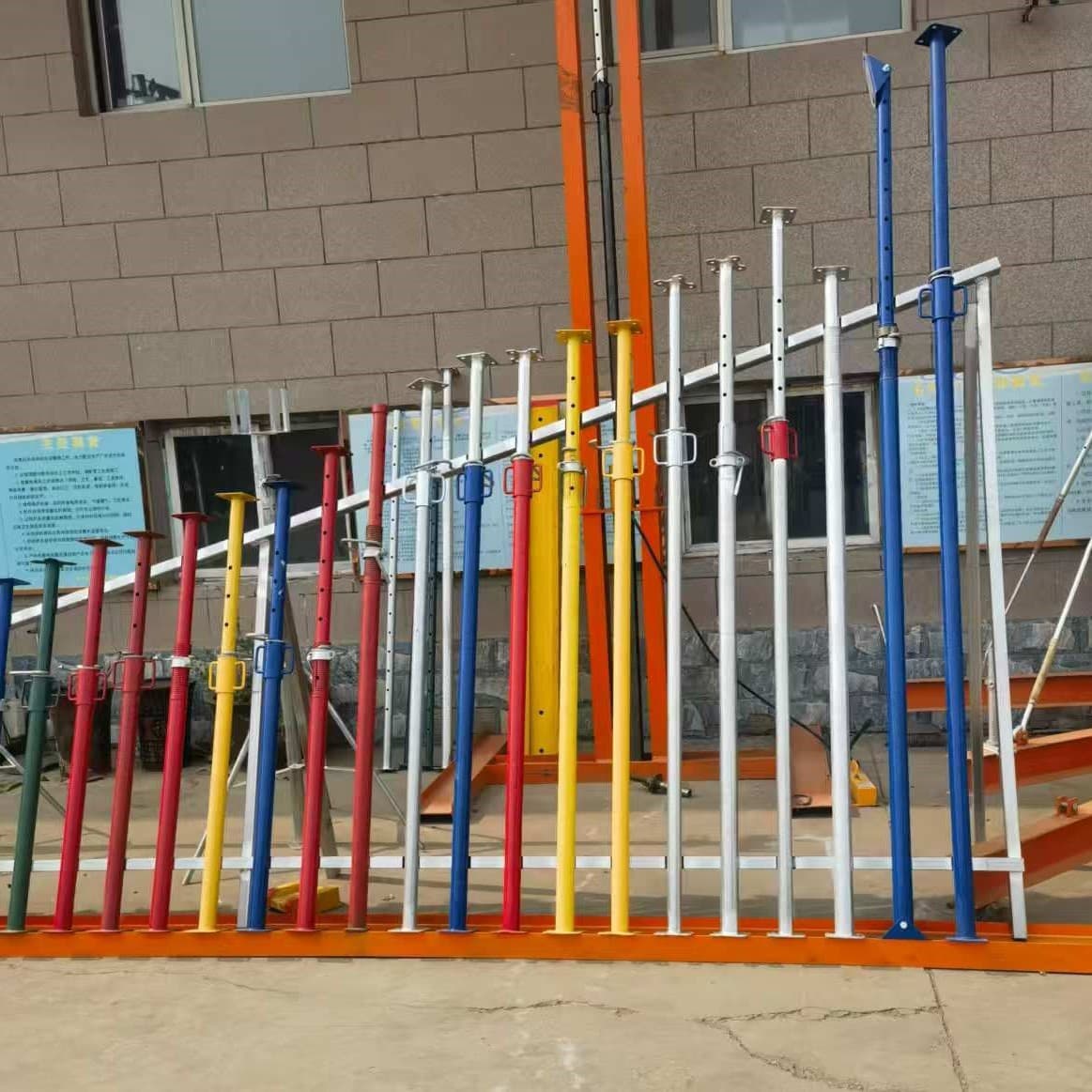
Visual cue: multiple hardware families can sit under one keyword
That is exactly why the page keeps one canonical URL but does not pretend the keyword alone chooses the part. The system, footing, and duty still separate the route.
The main ways this buying decision fails
The risk section is not filler. It exists so the buyer can see when this route is still safe to use and when the page is intentionally refusing to overstate certainty.
Footing looks acceptable but the supporting surface is not carrying the load evenly
Trigger: Soil, gravel, compacted fill, or edge conditions where the base plate can concentrate load into a weak point or overhang part of the support.
Impact: The jack may still look “correct” while the base settles, displaces, or overhangs the real support.
Mitigation: Keep sole boards or mud sills in the RFQ, verify full bearing under the base plate, and escalate when the surface condition is still uncertain.
Sources: OSHA 1926.451 scaffold foundations · Safe Work Australia general guide for scaffolds
Improvised packing is being used to make the base look level
Trigger: Someone proposes bricks, blocks, or loose site materials under the scaffold instead of a proper support and leveling method.
Impact: The scaffold may appear level while the support object crushes, shifts, or hides the real footing defect.
Mitigation: Reject makeshift packing, return to proper base plates and soleboards, and use adjustable legs only within the manual-controlled route.
Sources: OSHA 1926.451 scaffold foundations · HSE tower scaffold safety guidance
Tower adjustable legs are being used to chase extra height
Trigger: The buyer treats threaded adjustment as a shortcut for platform height instead of leveling.
Impact: The route becomes a misuse problem rather than a base-jack selection problem.
Mitigation: Keep the current tower manual visible and force a manual-review state when tower correction becomes too large.
Sources: PASMA Operator’s Code of Practice
Replacement demand hides a compatibility break
Trigger: The order is for an existing scaffold, but the buyer cannot confirm brand, OD, nut / stem style, or whether materials are being mixed.
Impact: A nominally similar jack may not fit, may not carry the same load path, or may create mixed-manufacturer risk.
Mitigation: Ask for the frame or system identity, material condition, and current manual before confirming interchangeability or pricing.
Sources: OSHA 1926.451 scaffold foundations · Bil-Jax leveling jacks
Public sizing data is mistaken for approval data
Trigger: A shaft family or posted load-test value is treated as universal permission for the same exposed-thread or duty case everywhere.
Impact: The RFQ looks confident while the actual use case still depends on the current manual and footing context.
Mitigation: Treat public dimensions as comparison signals only and keep the page explicit about uncertainty.
Sources: APAC adjustable scaffold base jacks · AMCO hollow base jack · PASMA Operator’s Code of Practice
The tower stays in service, but the footing check stays stuck on day one
Trigger: The scaffold remains erected for several days and the buyer assumes the original setup check is still enough.
Impact: Recurring inspection duties are missed while conditions, loading, or base stability may have changed.
Mitigation: Plan inspection after assembly and at least every 7 days in use, especially once the tower is being used for work at height.
Sources: PASMA Operator’s Code of Practice · HSE tower scaffold safety guidance
Indoor ringlock on hardstanding with 35 mm correction
Assumption: The system is known, the duty is ordinary access work, and the footing is firm but not perfectly level.
Outcome: This sits inside a standard OD38-style base-jack RFQ path with footing detail included, not omitted.
Caution: The page still avoids promising the exposed-thread limit without the current manual.
Frame scaffold replacement with unknown stem diameter
Assumption: The buyer only knows they need “an adjustable base jack for scaffolding” and has an old frame on site.
Outcome: The checker moves into controlled review because compatibility outranks price-first quoting.
Caution: Ask for frame brand, stem size, and a current photo before confirming a leveling-jack part number.
Mobile tower on uneven asphalt with 90 mm leveling demand
Assumption: The tower route is correct, but the leveling demand is no longer modest.
Outcome: The page forces manual review because tower adjustable legs are for leveling only and should stay at minimal extension.
Caution: Do not convert the thread into “free height” or ignore the manufacturer manual.
Crew wants to pack the base with bricks instead of fixing the footing
Assumption: The scaffold needs quick leveling and somebody proposes improvised support under the base point.
Outcome: The page should stop the RFQ-ready route immediately because the problem is now unstable support, not a normal jack selection.
Caution: Return to proper base plates, soleboards, and approved leveling controls instead of makeshift packing.
Shoring support on fill edge with heavy load direction
Assumption: The jack is part of a support-duty layout rather than a simple access scaffold footing.
Outcome: The route exits generic e-commerce logic and enters design-led review immediately.
Caution: A posted load-test number is not enough when footing and support duty are both critical.
Questions buyers ask before they can send a clean base-jack RFQ
The FAQ keeps the alias intent explicit while tightening the practical decision points that usually delay quotation.
If the checker already narrowed the route, use this draft and keep the footing, correction, and system visible in the first message.
Turn the keyword into a usable inquiry, not another clarification loop
The fastest next move is usually an RFQ that carries the scaffold system, footing condition, correction band, and whether the order is new supply or replacement. That is what allows the supplier to confirm the base-jack route in one pass.
Need an internal route with the alias wording?
This page intentionally keeps one canonical route. The alias phrases base jack scaffolding and adjustable scaffold legs for sale stay on the same URL and jump straight to the tool instead of spawning duplicate pages.
Page history
Published Mar 27, 2026. Last reviewed Jul 14, 2026. Public-source map refreshed on Jul 14, 2026.