6061-T6 vs. 6082-T6 Aluminium Scaffold Towers: A Procurement & Engineering Guide (2026)
Compare 6061-T6 and 6082-T6 aluminium scaffold tower alloys for strength, weldability, corrosion exposure, EN 1004 checks, and global RFQ supplier audits.
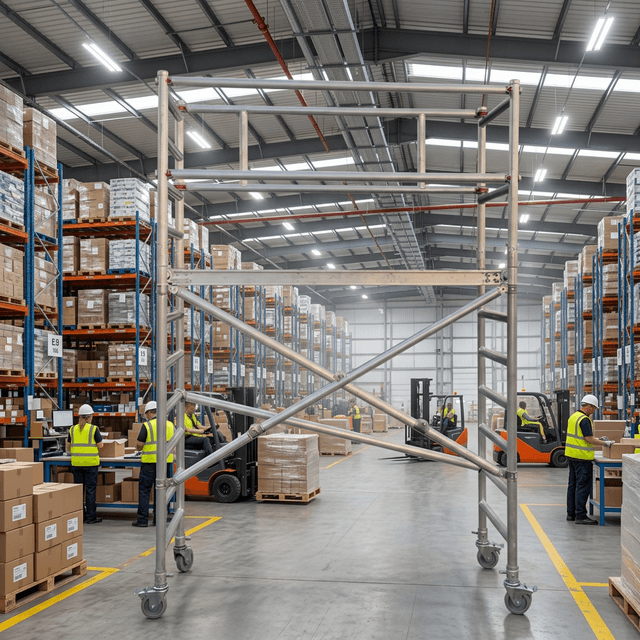
One-line buyer decision: When procuring aluminium scaffold towers globally, treat 6082-T6 as the higher-strength structural default for many EN-oriented specifications and 6061-T6 as the practical welding and cost-control choice in North American and Asian supply chains. Both require certified T6 material, controlled joints, and finished-tower testing before you can claim EN 1004 compliance.
For procurement managers, structural engineers, and equipment importers in 2026, sourcing an aluminium scaffold tower involves evaluating invisible structural elements. The alloy grade extruded by the manufacturer is the foundation of your equipment's lifespan, safety margins, and maintenance costs.
In global manufacturing, the two dominant 6000-series architectural alloys used for mobile access towers are 6061-T6 and 6082-T6. At first glance on a Bill of Materials (BOM), they appear identical. However, under high-load stress, continuous outdoor exposure, and complex welding processes, they perform differently.
This technical guide breaks down the engineering reality and supply chain economics between these two alloys to inform your next RFQ and vendor evaluation.
Scope note, updated July 22, 2026: This guide is intended for procurement evaluation and structural comparisons. It is not a substitute for manufacturer test certificates, EN 1004-1:2020 third-party laboratory reports, or site-specific engineering sign-offs.
1. Key Conclusions for Procurement
Before diving into the metallurgical data, here are the core takeaways for B2B buyers:
- Regional Sourcing Pattern: 6061-T6 is widely available in North American and Asian extrusion supply chains; 6082-T6/T651 is common in European structural aluminium supply and EN-oriented buyer specifications.
- Strength Is Certificate-Specific: 6082 is often selected where higher structural margins are needed, but tensile and proof stress values vary by product form, wall thickness, and standard. Always read the mill test certificate (MTC), not only the alloy name.
- Corrosion Exposure: Both alloys are 6000-series aluminium and can perform well outdoors. For coastal, offshore, or high-humidity sites, compare surface finish, anodizing/coating, maintenance interval, and joint design as well as alloy chemistry.
- Fabrication & Welding: 6061 is a familiar welded structural alloy in many factories. 6082 is weldable, but welded scaffold frames should receive tighter heat input, filler, and Heat Affected Zone (HAZ) inspection controls.
2. Evidence: Technical Specifications Comparison
When evaluating a supplier's material certificate, these are the baseline parameters you should expect for the "-T6" (solution heat-treated and artificially aged) temper.
| Engineering Dimension | 6061-T6 Aluminium | 6082-T6/T651 Aluminium | Procurement Impact |
|---|---|---|---|
| Tensile Strength (UTS) | Common datasheets show T6 structural extrusion values in the mid-200 MPa+ range; some specifications are higher by section and standard. | Common 6082-T6/T651 datasheets list structural plate/extrusion values around the high-200 MPa to 300 MPa+ range. | Use the supplier MTC and the tower test report; do not approve a tower on a generic alloy comparison table alone. |
| Proof / Yield Strength | Verify the certified proof stress for the exact tube, rung, and brace profile. | Often specified where higher proof stress is required, but values depend on thickness and product form. | Higher proof stress helps resist permanent tube deformation, but wall thickness and joint layout remain decisive. |
| Key Alloying Elements | Magnesium, Silicon | Magnesium, Silicon, Manganese | Manganese in 6082 refines grain structure and boosts corrosion resistance. |
| Weldability | Familiar welded structural alloy for TIG/MIG production lines. | Weldable, but factory procedures should control heat input and inspect the HAZ. | 6061 may reduce process risk for welded rungs and frames; 6082 needs stronger welding QA gates. |
| Machinability | Good | Excellent | 6082 is easier to cut and drill precisely, useful for complex connection nodes. |
| Relative Cost (Global Average) | Baseline in broad Asian and North American sourcing. | Often carries a premium where 6082 is less locally available. | Treat alloy premium as a landed-cost variable, not a fixed percentage. |
| Compliance Dependency | Can meet EN 1004-1:2020 when the complete tower passes material, dimension, load, safety, and performance requirements. | Can meet EN 1004-1:2020 under the same finished-product testing logic. | EN 1004 compliance belongs to the engineered tower system, not the alloy grade alone. |
Engineering Insight
The T6 temper is non-negotiable. Both alloys are relatively soft in their "O" (annealed) state. The T6 artificial aging process is what gives scaffold tubes the rigidity required to prevent catastrophic buckling. Always request the T6 temper certificate from your supplier.
3. Operational Boundaries: Which Alloy Suits Your Fleet?
Selecting the right alloy depends entirely on where the scaffold will be deployed and the specific regulatory environment of your market.
When to Procure 6061-T6 Towers:
- North American Markets: If your primary market is the US or Canada (ANSI/OSHA compliance), 6061 is standard, widely accepted, and easy to source replacement parts for.
- Cost-Sensitive General Construction: For standard indoor maintenance or general contracting where extreme weather exposure is limited.
- Welded Frame Designs: If the tower relies heavily on TIG-welded rungs rather than cold-crimped (ribbed) rungs, 6061 provides a more forgiving and consistent weld profile from the factory.
When to Procure 6082-T6 Towers:
- European Markets (EN-Oriented Specifications): Buyers operating under European procurement norms often encounter EN AW-6082 in structural aluminium quotations and MTCs.
- Marine & Offshore Environments: 6082 can be a strong candidate, but salt exposure still requires finish specification, inspection intervals, drainage details, and replacement criteria in the RFQ.
- Cold-Formed / Crimped Towers: Many premium European towers use cold-forming (crimping) instead of welding to attach rungs to the vertical tubes. 6082 performs exceptionally well in these high-stress mechanical joints.
4. Visualizing the Factory Difference: Welding vs. Cold-Forming
To understand why alloy choice matters in manufacturing, consider how the horizontal rungs are attached to the vertical uprights.
5. Factory Audit Checklist for Procurement Teams
When evaluating an offshore factory or a new domestic supplier for access equipment, use this checklist to verify their alloy claims and manufacturing quality.
- Request Mill Test Certificates (MTC): Do not accept a generic "Aluminium" spec. Demand an MTC (EN 10204 Type 3.1) showing the exact chemical composition (Si, Fe, Cu, Mn, Mg, Cr, Zn, Ti) to confirm it is genuinely 6061 or 6082.
- Verify the T6 Temper: Ask for evidence of the artificial aging process (oven duration and temperature logs). "O" or "T4" states are dangerously weak for scaffolding.
- Check Wall Thickness Correlations: If a supplier switches from 6082 to 6061 to save cost, they may need to increase the tube wall thickness (e.g., from 1.6mm to 2.0mm) to pass the same EN 1004 deflection tests. Verify this engineering math.
- Audit the Weld Quality (If Applicable): If the factory welds 6082 frames, include HAZ checks, filler-metal records, welder qualification, and sample destructive tests in the pre-shipment inspection plan.
- Confirm Local Market Acceptance: Ensure your end-users and local regulatory bodies (OSHA, HSE, WorkSafe) accept the proposed alloy and testing regime.
6. Frequently Asked Questions (FAQ)
Q: Can I mix 6061 frames with 6082 frames in the same tower? A: Structurally, the components might fit together if the dimensions are identical. However, from a compliance standpoint, mixing components from different batches or manufacturers immediately voids the EN 1004 / AS/NZS 1576 certification.
Q: Is 6082 worth the price premium? A: Yes, if your fleet operates in highly corrosive environments (coastal regions, chemical plants) or if you are targeting the premium European rental market where EN AW-6082 is heavily favored. For standard indoor/dry environments, 6061 is perfectly adequate and more cost-effective.
Q: Does alloy choice affect the load rating (Class 3 / 200kg per m²)? A: Both alloys can achieve a Class 3 rating. The manufacturer achieves this through tower geometry, wall thickness, and brace design. A 6061 tower might require slightly thicker tubing than a 6082 tower to achieve the exact same deflection resistance.
7. Ready to Upgrade Your Equipment Specifications?
The alloy you choose dictates the longevity and compliance of your entire rental fleet or construction project. Whether you are standardizing on 6061-T6 for cost-efficiency or upgrading to 6082-T6 for extreme durability, ensuring certified metallurgical quality is the first step.
Are you reviewing your scaffold supplier base for 2026? Our engineering and procurement team can help you navigate mill certificates, EN 1004 compliance, and factory audits.
Contact our engineering sales team today to discuss your next RFQ.
Sources & References
References checked on July 22, 2026.