Aluminium Scaffold Tower Procurement in 2026: EN 1004-1 Compliance & Supplier Selection Guide
A comprehensive 2026 procurement guide for aluminium scaffold towers, detailing EN 1004-1:2020 compliance, 3T vs. AGR methods, and structural safety requirements for global buyers.
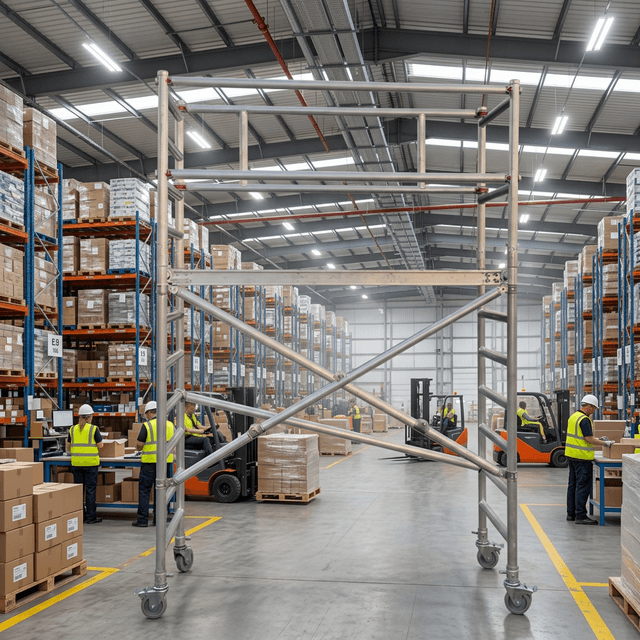
One-line buyer decision: When procuring aluminium scaffold towers in 2026, verify EN 1004-1:2020 structural test reports, specify whether you need 3T or AGR fall protection, and audit supplier extrusion specifications rather than buying on price alone.
As the global construction and facility management sectors prioritize "zero fall" safety targets in 2026, the procurement of aluminium mobile scaffold towers has shifted from a simple commodity purchase to a high-risk compliance decision. For procurement teams, distributors, and site engineers, the transition period for updated standards is over. The definitive benchmark is EN 1004-1:2020, alongside local execution guidelines (such as AS/NZS 1576 in Australia or PASMA directives in the UK).
This guide provides a comprehensive framework for buying, importing, and specifying aluminium scaffold towers. We will cover the critical compliance differences, structural pain points, and why the choice between 3T (Through The Trapdoor) and AGR (Advance Guard Rail) impacts your long-term fleet costs and site safety.
1. The 2026 Regulatory Baseline: Understanding EN 1004-1:2020
The standard covering mobile access and working towers made of prefabricated elements—EN 1004—received a major overhaul, published in late 2020 and fully enforced across global markets by late 2021/2022. By 2026, any supplier offering "EN 1004:2004" stock is selling non-compliant equipment.
Core Changes Procurement Must Verify
- Low-Level Scaffolds Now Included: Previously, towers under 2.5 meters in height were excluded from EN 1004. Now, all towers from ground level up must adhere to the standard. Buying cheap, uncertified "low-level folding towers" introduces massive liability.
- Reduced Distance Between Platforms: The maximum vertical distance between platforms is now strictly limited to 2.25 meters (down from previous larger gaps). The first platform must be placed at a maximum height of 3.40 meters.
- Advanced Wind Loading and Overturning Calculations: Suppliers must demonstrate compliance with stricter wind load testing and incorporate enhanced structural safeguards, including mandatory wind locks on all platforms and limits on castor detachment.
2. Erection Methods: 3T vs. Advance Guard Rail (AGR)
Procurement teams are frequently asked to specify whether they require 3T or AGR systems. Both methods comply with the continuous fall protection requirements of EN 1004-1:2020, but they differ fundamentally in design, cost, and operational speed.
The 3T Method (Through The Trapdoor)
The 3T method allows the operator to position themselves through the trapdoor of the platform. From this seated and protected position, they fit or remove the guardrails for the level above before fully standing on the platform.
- Pros: Lower initial capital cost. Standard bracing components (horizontal and diagonal braces) are universally understood and cheaper to replace. Highly versatile for complex or constrained environments.
- Cons: Slower to erect and dismantle. Relies heavily on user competence and strict adherence to training; operators can be tempted to take shortcuts.
The AGR Method (Advance Guard Rail)
AGR systems utilize specially designed, integrated guardrail panels that are temporarily attached to the level above from the safety of the level below. Once the AGR is in place, the operator ascends to a fully enclosed and protected platform.
- Pros: Foolproof continuous fall protection. Significantly faster to build and dismantle (fewer individual braces to handle). Reduces the risk of user error.
- Cons: Higher initial procurement cost due to specialized AGR frames. These frames are bulkier to transport and store than standard braces.
Procurement Decision Matrix
| Dimension | 3T Scaffold Towers | AGR Scaffold Towers |
|---|---|---|
| Initial Purchase Cost | Low to Medium | High |
| Component Count | High (Many individual braces) | Low (Integrated panels) |
| Assembly Speed | Slower | Up to 30% Faster |
| Transport Volume | Highly compact | Bulky due to AGR frames |
| Compliance Risk | Moderate (relies on user behaviour) | Low (system forces compliance) |
| Best Fit For: | Independent contractors, complex/tight spaces, budget-sensitive fleets | Large hire fleets, Tier 1 contractors, high-frequency use sites |
3. Structural Material Specifications: What to Audit
One of the largest pain points for buyers sourcing aluminium scaffold towers—particularly from overseas manufacturers—is the hidden degradation of material quality to meet aggressive price points. In 2026, importing a container of towers without specifying alloy grades and wall thickness is a critical failure.
Alloy Grade: 6061-T6 vs. 6082-T6
The structural integrity of a mobile tower relies heavily on the quality of the aluminium extrusion.
- 6061-T6: An excellent, highly versatile structural alloy with good corrosion resistance and strength. It is the industry standard for reliable scaffolding.
- 6082-T6: Often preferred in Europe, this alloy has slightly higher tensile strength than 6061 and excellent machining characteristics.
- Red Flag: Suppliers failing to declare the exact alloy or using lower-grade series (like 6063 without T6 tempering) to save costs. These frames will warp and bend under repeated site use.
Tube Diameter and Wall Thickness
A standard scaffold tower vertical tube has an outer diameter of 50.8mm (2 inches). However, the crucial metric is the wall thickness.
- Heavy Duty / Hire Fleet Standard: 1.8mm to 2.0mm wall thickness. This provides the dent resistance required for scaffolding that is thrown onto trucks daily.
- Standard Trade Duty: 1.6mm wall thickness. Acceptable for careful users, but will suffer a shorter lifespan in rough environments.
- High Risk / Non-Compliant: 1.2mm to 1.4mm wall thickness. Some low-cost importers utilize this thin-walled extrusion to undercut the market. While it may pass static load tests when brand new, a single dent compromises the vertical load-bearing capacity, leading to catastrophic buckling on site.
4. The 2026 Scaffold Tower Procurement Checklist
Before issuing a Purchase Order (PO) or entering a supply agreement, utilize this checklist to ensure compliance, safety, and commercial viability.
- Certificate Verification: Does the supplier hold a valid EN 1004-1:2020 certificate from a reputable third-party testing house (e.g., TUV, SGS)? Action: Demand the full test report, not just the front-page certificate.
- Height & Dimension Audit: Are the lowest platforms positioned at a maximum of 3.4m, and subsequent platforms at maximum 2.25m intervals?
- Material Spec Lock: Is the PO locked to a minimum 1.6mm wall thickness (preferably 1.8mm+) and 6061-T6 / 6082-T6 alloy?
- Fall Protection Choice: Have you explicitly chosen and documented the requirement for either 3T or AGR methods based on your site capabilities?
- Instruction Manuals: Does the supplier provide detailed, clear, and localized user manuals detailing the exact erection sequence? Note: EN 1004 requires the manual to be available on-site.
- Component Traceability: Are major components permanently marked or stamped with the manufacturer's identification and year of manufacture for traceability?
- Wind & Stabilizer Guidelines: Are the stabilizer footprints clearly defined for indoor vs. outdoor use to manage the 2026 stricter wind loading metrics?
5. The Danger of "Mix and Match" Sourcing
A major risk in the scaffolding supply chain is the practice of mixing components from different manufacturers. A buyer might source frames from Supplier A, braces from Supplier B, and platforms from Supplier C.
This practice immediately voids the EN 1004-1:2020 certification.
The standard tests the tower as a complete structural system. The interactions between the spigots, the brace hooks, and the platform locking mechanisms are calibrated to function together. If an incident occurs on a hybrid tower, the local health and safety executive (such as the HSE in the UK or SafeWork in Australia) will place the entirety of the legal liability on the employer or procurement entity that created the uncertified hybrid system.
If you are replacing parts, you must buy OEM parts from the original manufacturer or their authorized distributor.
6. How We Support Your Compliance Journey
Navigating international scaffolding standards, validating supplier extrusion data, and managing landed costs is complex. At Aluminium Scaffold Tower, we engineer our systems strictly aligned to the latest EN 1004-1:2020 and AS/NZS 1576 standards.
Whether you require rapid-assembly AGR systems for a Tier-1 construction site or durable 3T towers for a heavy-duty rental fleet, we provide complete transparency on our 6061-T6 extrusion specs and structural testing data.
Ready to upgrade your scaffold fleet? Contact our engineering and procurement support team today to request our latest compliance documentation, product specifications, and bulk pricing.
7. Sources and Verification
The guidance in this document is derived from the latest active standards and industry bodies as of 2026:
- British Standards Institution (BSI) / CEN: EN 1004-1:2020 Mobile access and working towers made of prefabricated elements. Validated structural metrics, platform distances, and continuous fall protection requirements.
- PASMA (Prefabricated Access Suppliers' and Manufacturers' Association): 2021/2022 transition guidelines enforcing the 3T and AGR erection methodologies for compliance.
- Safe Work Australia: AS/NZS 1576 series guidelines and WHS responsibilities for High Risk Work (HRW) and tower stability.
- Health and Safety Executive (HSE UK): Scaffold checklist and mobile tower guidance, reinforcing the prohibition of mixing supplier components.
- Aluminium Association Alloy Designations: Standardized material properties for 6061-T6 and 6082-T6 structural performance in high-stress environments.
(Disclaimer: This guide is for informational purposes for procurement professionals. Always refer to your local regulatory authority and the manufacturer's specific user manual prior to assembling or using any height access equipment.)