
Scaffolding Assembly Planner
Plan scaffolding assembly, assembly scaffolding, the assembly of scaffolding, and assembling scaffolding tasks before work starts. Whether you need the formal assembly scaffold definition or practical planning tools, use this to estimate time, crew size, boundary inputs, and when the job must move to competent-person or manual review.
Decision Summary
What the planner can decide before assembly starts
Reviewed July 8, 2026
Plan the route, not approval
The tool estimates crew and time, then flags when the manufacturer manual and competent-person review should take over.
Boundary inputs matter
Height basis, scaffold type, overhead lines, ground condition, and jurisdiction can turn a quick estimate into a stop-and-review task.
Alias intent is covered
"Assembly of scaffolding", "assembling scaffolding", "assembly scaffolding", "assembly scaffold definition", and "scaffolding assembly" describe the same planning task, so this single canonical page handles them all.
If your brief is specifically about assembly mobile scaffold, use the mobile scaffold assembly instructions page for wheel locks, platform-height basis, ground condition, overhead-line, and jurisdiction routing.
Key Rules When You Assemble Scaffolding
Assembling scaffolding (or scaffold erection) is a high-risk activity. Primary OSHA and BLS sources reviewed in July 2026 show why the planner treats assembly as a screening step rather than approval: OSHA lists Scaffolding, construction (29 CFR 1926.451) in its FY2025 top 10 most frequently cited standards, BLS reported 1,032 construction and extraction fatalities in 2024 including 370 fatal falls, slips, and trips, and OSHA identifies scaffold incidents as commonly involving planking or support giving way, slipping, missing fall protection, or falling objects. Following a systematic approach helps confirm that the structure is stable, level, and controlled before work starts.
1. Foundation is Everything
Never assemble scaffolding on soft or uneven ground without a documented footing plan. OSHA Subpart L requires sound, rigid, and capable footings; local manuals decide the exact base jack, sole board, or plate detail.
2. Stability Ratio vs. Modern Standards (EN 1004-1:2020)
Treat the old height-to-base ratio (like 3:1 or 4:1) as an outdated rule of thumb, not a universal permission. Under the current EN 1004-1:2020 standard, simple ratios are abolished. Crucially, the 2020 update now covers all mobile access towers from the ground up, removing the previous exemption for towers under 2.5m. This means even "low-level" room scaffolds must comply with safety measures like maximum 2.25m between platforms, castor security, and wind locks. OSHA still references a 4:1 base ratio before outriggers are required for mobile scaffolds, but the manufacturer's manual always overrides generic rules.
3. 4x Load Capacity
OSHA requires scaffolds and components to support their own weight plus at least four times the maximum intended load. The tool still cannot validate a specific product rating.
4. Power Line Clearance (OSHA 1926.451)
OSHA 29 CFR 1926.451(f)(6) strictly mandates voltage-based scaffold clearance. A 10 ft (3m) clearance is required for uninsulated lines or insulated lines from 300V up to 50kV. The only exception is for insulated power lines of less than 300 volts, which have a minimum clearance of 3 feet (0.9m). Always assume lines are energized unless explicitly confirmed and grounded by the utility company. Unknown voltages require utility confirmation before any assembly begins.
5. Fall Protection During Assembly
Erecting or dismantling requires fall prevention planned by scaffold type and jurisdiction. OSHA 1926.451(g) requires workers more than 10 ft above a lower level to be protected by guardrail systems, personal fall arrest systems, or the scaffold-type controls listed in that rule. For prefabricated mobile towers, current manufacturer manuals and UK tower training schemes commonly use AGR or 3T-style methods to maintain collective protection during assembly; do not treat that as a universal exemption from local fall-protection duties.
6. Control access until inspected
During active assembly, treat the scaffold as incomplete and unavailable for general use. Use the site's tag, barrier, or access-control system to show "do not use" status, then release it only after the required competent-person inspection and report are complete.
Safe Assembly Clearances & Capacity
Visualizing critical screening limits from safety authorities. The selected product rating, voltage table, site conditions, and competent-person review still control the final assembly decision.
- 4:1 Load Ratio: The scaffold and each component must support its own weight plus at least 4x the maximum intended load under OSHA's U.S. construction rule; the selected product's rating still controls.
- Voltage-based Clearance: OSHA's table includes 3 ft for insulated lines below 300 V, 10 ft for several common ranges, and extra distance above 50 kV. Unknown voltage is a stop-and-confirm input.
Method, Evidence, and Limits
The planner combines scaffold type, platform height, and crew experience into a deterministic estimate. It deliberately stops short of approval because scaffold assembly depends on the current system manual, local work-at-height law, and site conditions.
| Decision Point | Evidence Used | Limit | Next Action |
|---|---|---|---|
| Time and crew estimate | Internal deterministic planning model reviewed July 7, 2026. | Does not inspect component condition, ground bearing, weather, or site access. | Use it to size the crew, then request the current system manual before assembly. |
| Load and footing checks | OSHA 29 CFR 1926.451 capacity, footing, and energized-line principles; reviewed July 7, 2026. | Does not prove a specific scaffold kit, plank, caster, or base jack is rated for the intended load. | Match the intended load to the manufacturer rating chart and reject mixed or unidentified components. |
| Licence and jurisdiction routing | SafeWork NSW high-risk work licence guidance for erecting scaffolding; OSHA Subpart L for U.S. construction scaffolds; HSE guidance for UK tower scaffold inspections. | Country, state, union, client, and site rules may be stricter than the public summary. | Confirm destination rules before assigning the crew or issuing a work pack. |
| Inspection and tagging handover | HSE inspection-before-use and seven-day construction inspection guidance; OSHA competent-person inspection before each work shift and after events that could affect scaffold integrity. | Tag colours are not universal legal requirements. Site policy may use tags, but the controlling record is the required inspection and any local documentation. | Keep the scaffold unavailable for use until assembly is complete, inspected, documented, and handed over under the site's access-control process. |
Assembly Decision Flow
The planner is useful when it makes the next decision obvious: continue with a standard work pack, pause for missing inputs, or move the job to manual review. Use this flow before assigning labour or releasing components to site.
Use the result this way
- Proceed: standard range, known height basis, confirmed ground, and no overhead-line issue.
- Pause: height basis, ground, voltage, local rule, or component identity is unknown.
- Escalate: modular scaffold, higher platform, public interface, sheeting/wind exposure, mixed parts, or custom loading.
Scaffolding Assembly Risks & Mitigations
| Risk Factor | Consequence | Mitigation Strategy |
|---|---|---|
| Uneven Base Foundation | Tower collapse or tipping. | Use adjustable base jacks and sole boards. OSHA requires level, sound footings capable of supporting loaded scaffold without displacement. |
| Missing Planks / Fall Hazards | Open platform gaps, missing edge protection, or improvised decking can expose workers to falls and dropped-object hazards. | Follow the manufacturer platform layout and OSHA planking/guardrail rules for the applicable scaffold class; do not infer approval from the planner. |
| Overloading | Structural failure and deck collapse. | Verify the manufacturer's rated capacity chart and the OSHA 4x maximum-intended-load requirement before loading; do not rely on a generic duty label alone. |
| High Winds | Loss of stability during assembly, movement, or handover. | Follow the manufacturer wind limit and stop when weather may make the scaffold unsafe. OSHA 1926.451(f)(12) prohibits work on or from scaffolds during storms or high winds unless a competent person has determined it is safe and personal fall-arrest or wind-screen protection is provided. Treat sheeting or netting on mobile towers as a manufacturer/manual review item because sail effect can overturn a tower. |
| Unauthorized Alteration | Structural weakening or collapse after initial assembly. | Once assembled and inspected, components (like ties, braces, or guardrails) must never be removed by unapproved trades. Only a designated Competent Person can authorize modifications to the assembly. |
Route Options by Assembly Scenario
| Scenario | Tool Result to Trust | Evidence or Limit | Minimum Next Step |
|---|---|---|---|
| 4m mobile tower on level indoor slab | Time, crew, and sequence are usable for early planning. | Still depends on the tower manual, complete guardrails, castor locks, and inspection before use. Note: EN 1004-1:2020 covers mobile access and working towers made of prefabricated elements; product-specific permissible indoor/outdoor heights still come from the selected manufacturer's configuration and national adoption. | Issue a standard work pack and attach the current manual. |
| 8m modular scaffold near public access | Crew count is only a routing estimate. | Load, ties, protection, exclusion zones, and inspection records are outside the generic planner. | Escalate to competent scaffold design and site-specific method review. |
| Unknown voltage overhead line nearby | Treat the output as a stop-work boundary state. | OSHA clearance is voltage-based; unknown voltage cannot be cleared by a generic estimate. | Confirm voltage, isolation, relocation, or utility/site controller controls before assembly. |
When to Use the Planner vs Manual Review
The Boundary: Competent Person vs. Qualified Person
OSHA clearly divides responsibility between these two roles. A Competent Person manages day-to-day safety, recognizes hazards (like bad weather or damaged parts), and has the authority to stop work or take corrective action immediately. A Qualified Person possesses recognized credentials (like an engineering degree) or extensive expertise and is responsible for designing the scaffold and solving complex structural problems. The planner helps you prepare for the Competent Person's daily check; it does not replace the Qualified Person's design for complex or modular setups.
Use the planner
Early-stage crew sizing, time planning, component sorting, and deciding whether the brief is still a standard tower or modular scaffold task.
Escalate the result
Heights near the upper tool range, modular systems, mixed jurisdictions, uncertain height basis, wind exposure, public access, or unknown overhead-line voltage.
Do not use as approval
Final component selection, load certification, rescue planning, tie design, structural calculations, and licence decisions need qualified review.
Risks & Trade-offs: Scaffolding vs. MEWPs
Before committing to assembly of scaffolding, consider whether a Mobile Elevating Work Platform (MEWP), such as a scissor lift, might be a safer or more efficient alternative. Scaffolding is not always the best tool for every job.
| Decision Factor | Scaffolding Assembly | MEWPs (Scissor Lifts) | Trade-off / Limitation |
|---|---|---|---|
| Ground Conditions | Can be levelled on uneven ground using adjustable base jacks and sole boards. | Requires a relatively flat, firm surface to operate safely. | If ground is highly uneven or sloped, MEWPs may tilt and lock out. Scaffolding is often the only option. |
| Work Area Access | Components can be carried through narrow doors or up stairs before assembly. | Machine must be able to drive into the work area; limited by machine footprint. | For tight internal spaces or upper floors without lift access, scaffolding is superior. |
| Multiple Locations | Time-consuming to dismantle, move, and reassemble across different rooms. | Can be easily driven from one spot to another in minutes. | If the job requires moving constantly, MEWPs are significantly faster and reduce fatigue. |
| Initial Cost vs. Duration | Lower rental cost per week, but incurs labor cost to assemble/dismantle. | Higher rental cost, plus potential transport fees, but zero assembly time. | For long-duration projects (weeks/months) in one spot, scaffolding is more economical. For 1-day tasks, MEWPs often win. |
Frequently Asked Questions
Can one person assemble scaffolding?
Treat one-person assembly as an exception for products whose current manual explicitly allows it. The planner starts from a two-person minimum because passing frames, platforms, and braces while staying within guardrail discipline usually needs a controlled handoff.
Do I need a license to assemble scaffolding?
It depends on jurisdiction and the fall-risk scenario. In Australia, SafeWork NSW and other state regulators require a High Risk Work Licence (Class SB for basic modular scaffolds) if a person or object could fall more than 4 metres from the platform. In the U.S., OSHA uses competent-person and scaffold-specific construction controls instead of that same licence label.
What is the assembly scaffold definition?
The assembly scaffold definition refers to the procedure of erecting a temporary structure (scaffold) used to support a work crew and materials to aid in the construction, maintenance, and repair of buildings and structures. It encompasses the planning, footing, erection, and inspection required before the scaffold can be safely used.
What is the difference between assembly of scaffolding, assembling scaffolding, assembly scaffolding, and scaffolding assembly?
They refer to the same process. "Assembly of scaffolding", "assembling scaffolding", and "assembly scaffolding" focus on the physical action, while "scaffolding assembly" refers to the procedure. All require the same safety checks, foundation preparation, and structural bracing.
Why does the result ask for manual review?
The tool can estimate route, time, and staffing, but it cannot see component markings, ground bearing, wind, damaged parts, overhead lines, or the current manufacturer manual. Those are approval inputs, not calculator inputs.
What should I send for the next review?
Send scaffold type, platform height versus working height, site country/state, indoor or outdoor use, ground condition, overhead-line status, intended load, and the system brand if known.
Is the planner valid for mixed scaffold parts?
No. Mixed, unmarked, damaged, or unknown components should fail the tool's boundary state. Assembly should continue only when the parts match the system manual and rating chart.
Does OSHA require red and green scaffold tags?
OSHA requires competent-person inspection and safe access controls; tag colours are usually a site or company system. Use tags when your site requires them, but do not treat a generic colour label as a substitute for inspection records.
What should happen after high winds or a storm?
Stop using the scaffold until a competent person checks whether wind, impact, alteration, or weather exposure may have affected stability. Under the UK Work at Height Regulations 2005 (WAHR), scaffolding must be inspected before first use, at least every 7 days while in use, and after any adverse weather that could jeopardise safety.
Data Sources & Regulatory References
- BLS CFOI and OSHA scaffold incident context: BLS fatal occupational injury data is used for 2024 construction and extraction fatality context. OSHA top-cited standards and scaffold construction guidance are used for violation and hazard-pattern context. The page does not infer current cause percentages when public primary evidence is not specific enough.
- OSHA 29 CFR 1926 Subpart L: U.S. construction scaffold requirements used here for footing, capacity, platform, and energized-line screening context. Last reviewed for this page on July 7, 2026.
- Official source links: OSHA 29 CFR 1926.451 scaffold rule; OSHA FY2025 top cited standards; OSHA scaffold construction overview; BLS 2024 fatal occupational injuries; SafeWork NSW high risk work licences; HSE scaffold and tower inspections; HSE CIS47 inspection and reports; UK NASC SG4:22 Fall Protection; PASMA tower guidance; EN 1004 tower standard overview.
- HSE scaffold and tower inspection guidance: Used for UK inspection-before-use, seven-day construction inspection, and inspection-after-adverse-weather context. Tag systems are treated as optional site controls unless local or client rules require them. Last checked July 8, 2026.
- Australian high-risk scaffolding work guidance: Used only to flag high-risk work licence routing for erecting scaffolding and the need to confirm state or territory rules. The page does not issue Australian legal advice. Last checked July 8, 2026.
- European Standard EN 1004-1:2020: Referenced for modern stability calculation rules replacing the outdated 3:1 ratio and for prefabricated mobile access tower scope. Product-specific height, stabilizer, ballast, and platform limits must still come from the current manufacturer manual. Last checked July 8, 2026.
- PASMA Tower Safety Guidelines: Referenced as tower-sector training context for 3T/AGR-style assembly controls and wind/sheeting caution. Because public pages do not replace the product manual, this page treats wind-speed thresholds as manual-confirmation inputs rather than universal calculator approvals. Last checked July 8, 2026.
- Manufacturer assembly manuals: The final source for component sequence, stabilizers, wind limits, platform spacing, locking pins, access, and inspection handover. Public evidence is insufficient when the product model is unknown.
- Industry best practices: Manufacturer instructions, competent-person judgement, site exclusion rules, and client documentation can be stricter than public summaries. The page marks unsupported model-specific details as unavailable until the current manual is supplied.
- Important Disclaimer: The statistics and regulations cited above are based on federal and national standards for educational purposes. Specific local laws, union regulations, or site-specific rules may impose stricter requirements. Always consult a competent person prior to assembly.
Ready to get started?
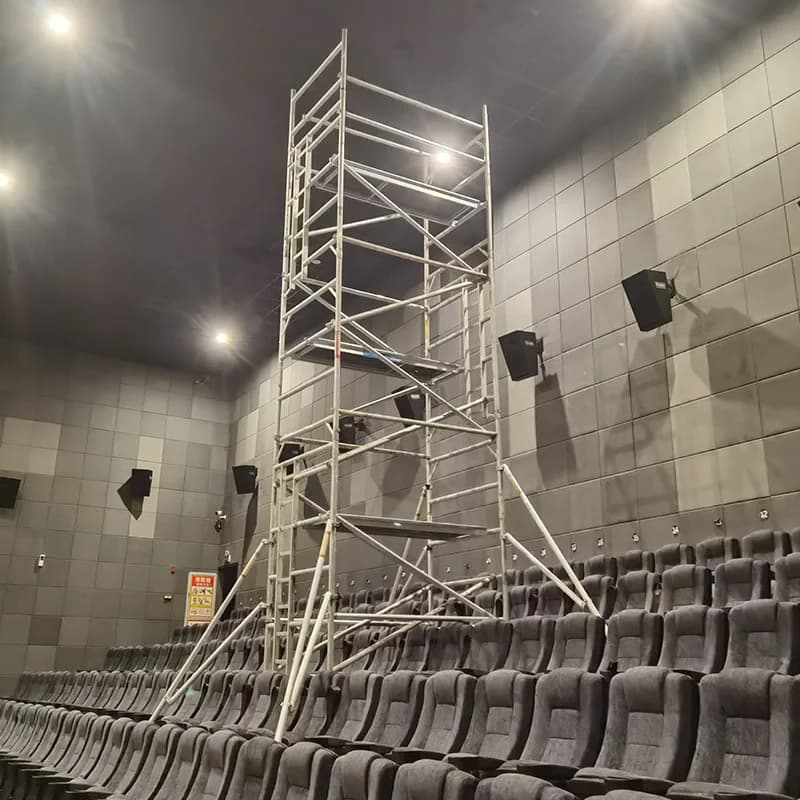
Ensure you have the right equipment before you begin your scaffolding assembly. Browse our high-quality, certified scaffold towers.