Aluminium Scaffold Tower Wall Thickness: 1.6mm vs 2.0mm Procurement Guide (2026)
Compare aluminium scaffold tower wall thickness, 1.6mm vs 2.0mm, with EN 1004 checks, sourcing risks, and RFQ guidance for global 2026 procurement teams.
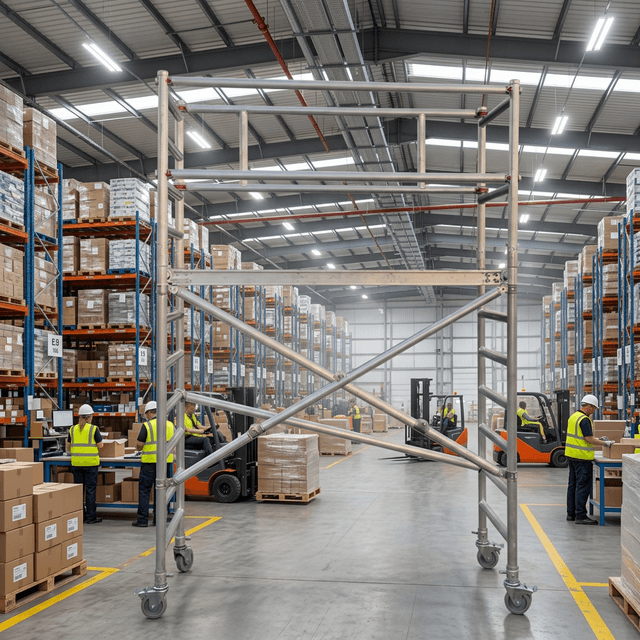
One-line buyer decision: When procuring aluminium scaffold towers, choosing between 1.6mm and 2.0mm tube wall thickness is a trade-off between portability/initial CapEx and extreme-site durability. Both thicknesses can fully comply with EN 1004-1:2020 if engineered properly.
For buyers, procurement teams, and engineers sourcing access equipment globally in 2026, comparing vendor quotations can be confusing. Two aluminium scaffold towers might look identical, claim the same load class, and reach the same working height, yet their prices differ by 20% to 40%. Often, the hidden variable is the aluminium tube wall thickness—specifically, the debate between 1.6mm and 2.0mm (or sometimes 1.8mm/2.5mm).
Is a 1.6mm tower unsafe? Is a 2.0mm tower always worth the premium? This evergreen procurement guide breaks down the engineering boundaries, the EN 1004 compliance realities, and the Total Cost of Ownership (TCO) variables to help you make an informed sourcing decision.
Scope and limits (2026): This guide applies to prefabricated aluminium mobile access towers and procurement comparisons for certified tower systems. It is not a substitute for a project-specific structural calculation, local work-at-height compliance review, or the manufacturer's assembly manual.
1. The EN 1004-1:2020 Compliance Reality
The most common misconception among procurement officers is that safety regulations dictate a minimum wall thickness for access towers.
The truth is: EN 1004-1:2020 does not mandate a specific wall thickness.
Instead, European standards are performance-based. A scaffold tower must withstand rigorous structural testing, including:
- Load Capacity Tests: Sustaining the specified safe working load (e.g., Class 3 at 200kg/m²).
- Stiffness and Stability Tests: Resisting horizontal forces without unacceptable deflection.
- Joint Strength: Ensuring the welds and cold-formed joints don't fail under stress.
A manufacturer can achieve compliance using a 1.6mm wall if their structural geometry, joint engineering, and aluminium alloy grade (e.g., 6061-T6 or 6082-T6) are optimized. Conversely, a poorly welded 2.0mm tower could fail the standard's tests. Compliance over thickness should be your primary procurement filter.
2. Structural Cross-Section Comparison
To understand the physical difference, we must look at the standard scaffolding tube size, which is globally standardized around a 50.8mm (2-inch) Outer Diameter (O.D.).
Cross-sectional comparison of standard 50.8mm O.D. aluminium scaffold tubing.
3. Procurement Specification Table: 1.6mm vs. 2.0mm
When evaluating bids, use the following matrix to compare the two main thickness profiles against your operational needs.
The ranges below are procurement-planning estimates for comparable certified systems, not warranty guarantees. Always verify alloy grade, tube diameter, load class, assembly method, and certificate scope before treating two quotations as equivalent.
| Procurement Dimension | 1.6mm Wall Thickness | 2.0mm Wall Thickness |
|---|---|---|
| Typical Target Market | Tradesmen, Facility Management, Light Industrial | Rental Fleets, Heavy Construction, Oil & Gas |
| Initial CapEx Cost | Economical: Generally 15-30% cheaper to procure | Premium: Higher material and freight costs |
| Component Weight | Lighter: Easier handling and reduced operative fatigue | Heavier: Requires more effort during assembly |
| Dent & Impact Resistance | Moderate: Susceptible to denting if dropped on concrete | High: Superior resistance to rough site handling |
| Weld Durability | Sufficient for normal use | Exceptional: Thicker material offers stronger TIG welds |
| Expected Lifespan | 5–8 years (with careful handling) | 10+ years (even in harsh rental environments) |
| EN 1004 Compliance | Yes (if properly certified and tested) | Yes (often exceeds minimum safety thresholds) |
4. Engineering & Site Manager Checklist for Sourcing
If you are a procurement manager or engineer ready to send out RFQs, do not blindly request "the thickest tower." Instead, evaluate your site environment using this checklist:
✅ 1. Evaluate Site Abuse Levels
- High Abuse (Rentals, Tier-1 Construction): Opt for 2.0mm. The thicker wall prevents frame tubes from denting. A dented tube severely compromises the structural integrity of a scaffold tower and requires immediate replacement.
- Low Abuse (Indoor Maintenance, Data Centers, Schools): Opt for 1.6mm. The lighter weight speeds up assembly, limits floor-loading issues, and lowers CapEx.
✅ 2. Calculate Assembly Fatigue
If your operatives must erect and dismantle the tower multiple times a day, the cumulative weight difference of a 2.0mm system can cause severe fatigue, increasing the risk of accidents. For highly mobile, fast-paced teams, a certified 1.6mm system is often safer due to easier handling.
✅ 3. Verify Welding Methodology
Ask the supplier about their welding process. A 1.6mm tube requires highly precise robotic TIG welding to ensure the joint doesn't burn through or weaken. A 2.0mm tube is more forgiving to weld and often yields a more robust joint.
✅ 4. Demand Certification, Not Just Spec Sheets
Always request a third-party Certificate of Conformity for EN 1004. Ensure the certificate matches the exact product name, assembly method (such as 3T or AGR assembly methods), and load class you are purchasing.
5. Conclusion: Aligning TCO with Wall Thickness
The decision between 1.6mm and 2.0mm wall thickness is fundamentally a Total Cost of Ownership (TCO) calculation.
If you buy a 1.6mm tower for a harsh, heavy-construction rental fleet, you will likely spend the initial CapEx savings on replacement frames within the first two years due to impact damage. Conversely, specifying a 2.0mm tower for an indoor painting crew is an over-engineered waste of capital that will only slow down their daily work.
Ready to specify the right tower for your next project? Our engineering team can help you map your exact site requirements to the optimal scaffold profile. Contact our technical sales team for a consultation or RFQ today to ensure compliance, safety, and CapEx efficiency.
6. FAQ: 1.6mm vs. 2.0mm Wall Thickness
Does EN 1004-1:2020 mandate a 2.0mm wall thickness for aluminium scaffolds?
No. The EN 1004 standard is performance-based. It requires the tower to pass structural and load tests rather than dictating a specific wall thickness. A properly engineered 1.6mm tower can be fully compliant.
Can I mix 1.6mm and 2.0mm frames from different suppliers?
Never mix scaffold components from different manufacturers or distinct product lines, regardless of wall thickness. Doing so can void the tested system configuration and create serious safety risks.
Is a thicker wall always better for scaffold towers?
Not necessarily. Thicker walls improve resistance to dents and rough handling, but they also increase component weight, assembly effort, and freight cost. The right choice depends on abuse level, movement frequency, and expected ownership period.
Sources & References
- PASMA: EN 1004 complete guide: Guidance on EN 1004-1:2020 revision and compliance boundaries.
- Health and Safety Executive: scaffolding and mobile towers: UK regulator guidance on safe scaffolding and mobile tower use.
- The Work at Height Regulations 2005: Legal duties that frame work-at-height planning, equipment selection, and inspection controls.