SA Lowers HRCW Fall Threshold to 2 Metres: Impact on Mobile Scaffold Compliance (July 2026)
SA's 1 July 2026 HRCW threshold drops to 2m. Use this guide to update aluminium mobile scaffold tower SWMS, specifications, handover checks, and RFQs.
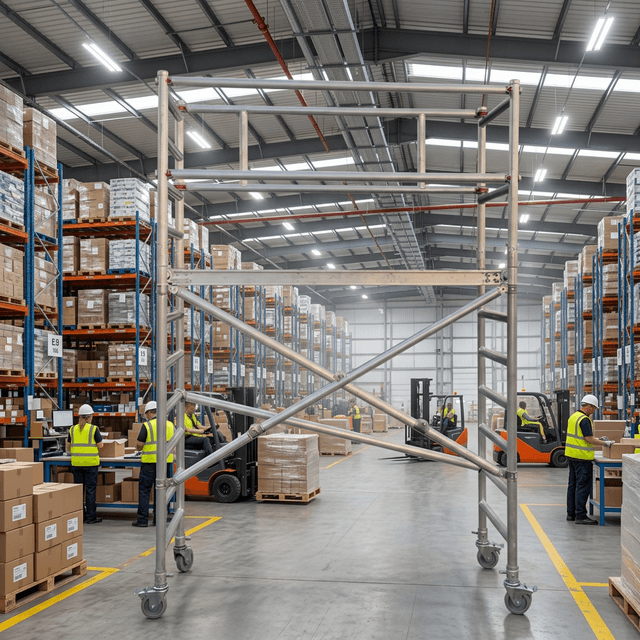
Decision-Level Conclusion: Effective 1 July 2026, South Australia (SafeWork SA) will formally lower the threshold for High Risk Construction Work (HRCW) from 3 metres to 2 metres. Buyers, distributors, and site managers using aluminium mobile scaffold towers must update their protocols, because construction work with a fall risk greater than 2 metres will require a site-specific Safe Work Method Statement (SWMS) before work starts.
Use this update for SA-bound construction work planning and scaffold-tower procurement conversations. It does not replace legal advice, the site PCBU's SWMS process, manufacturer instructions, or regulator confirmation for a specific job.
Executive Summary
A critical compliance change has been identified for the South Australian construction and trade sectors. SafeWork SA is aligning its fall protection thresholds with the national Model Work Health and Safety (WHS) laws by amending the Work Health and Safety (High Risk Construction Work) Amendment Regulations 2025.
From 1 July 2026, the trigger point for falls being classified as High Risk Construction Work (HRCW) drops from 3 metres to 2 metres. For the mobile aluminium scaffold tower market, this is highly impactful. The majority of standard trade scaffolds operate within the 2m to 3m platform height range. Under previous rules, this height required general duty of care and hazard management; under the new rules, it is reclassified as HRCW and legally demands a fully documented SWMS before any work commences.
This is a regulatory compliance change, not just a recommendation. Site managers lacking a SWMS for a 2.5m scaffold setup face immediate stop-work orders and significant non-compliance fines. Importers and distributors must proactively update user manuals and sales advisory processes to ensure clients are not caught off-guard.
Why This Matters for Scaffold Tower Buyers
The 2m to 3m platform-height band is common in lightweight aluminium mobile scaffold tower packages used by trades, facility teams, residential builders, and hire customers. The practical change is that SWMS readiness moves from a site-admin afterthought into the buying brief: the tower package, user instructions, guardrail/toe-board set, stabiliser assumptions, inspection handover, and worker induction notes must all support the site-specific SWMS.
For a quick procurement path, compare the mobile scaffold tower guide, check target height bands with the build-by-height tool, and use the standards page before releasing an SA-bound RFQ. If the package still needs clarification, send the height, platform size, duty rating, and destination site assumptions to the OEM team.
What Changed (Last 30 Days)
| Regulatory Element | Previous State (South Australia) | New State (Effective 1 July 2026) | Buyer/Procurement Impact |
|---|---|---|---|
| HRCW Fall Threshold | 3 metres | 2 metres | Scaffolds >2m now officially trigger HRCW protocols. |
| SWMS Requirement | Recommended for 2m-3m | Mandatory for falls >2m | Mandatory SWMS templates must be provided or sourced for the most common scaffold height brackets. |
| Hierarchy of Controls | Always applicable, but often loosely enforced under 3m | Strictly enforced under HRCW framework for >2m | Procurement must ensure components like guardrails and toe-boards are standard for any 2m+ tower. |
| National Alignment | SA lagged behind the national Model WHS standard | SA is now unified with the national standard | Distributors operating nationally can streamline their compliance advisory, standardizing on the 2m rule. |
Scope and Limits
- Applies from: 1 July 2026.
- Jurisdiction: South Australia construction work under SA WHS regulations.
- Trigger: work involving a risk of a person falling more than 2 metres.
- Main obligation: prepare and follow a site-specific SWMS before high-risk construction work starts.
- What does not change: the general duty to manage fall risks at any height, the need to follow manufacturer instructions, and the separate high-risk work licence threshold for scaffolding work involving a platform with a fall over 4 metres.
- What buyers should not assume: this update does not automatically certify a product, replace AS/NZS scaffold design requirements, or make a generic SWMS acceptable for every site.
Mobile Scaffold Height Compliance Matrix (SA Edition)
Impact on Buyers, Specifiers, Distributors, and Importers
| Role | What Changes Now | What Fails if Ignored |
|---|---|---|
| Buyer / Engineering (Site level) | Must ensure every scaffold deployment >2m is backed by an active SWMS. | Site works will be halted by inspectors; risk of heavy fines. |
| Distributors / Resellers | Need to adjust product manuals and pre-sale checklists to warn buyers of the 2m SWMS threshold. | Loss of customer trust; selling equipment that immediately violates site safety protocols if buyers are unaware. |
| Importers | No change to the physical product spec, but compliance documentation in the box should reflect the national 2m standard. | Missed opportunity for value-add; competitors may market "HRCW Ready" documentation packs. |
Action Checklist (Who Should Act Now)
- Audit Current SWMS Libraries: Review all existing templates to ensure they explicitly cover mobile scaffold erection, alteration, and dismantling for the 2m to 3m height bracket.
- Update Procurement Specs: Embed the SWMS requirement into tender/contract clauses for any contractor bringing mobile scaffolds onto SA sites.
- Refresh Distributor Advisory: Instruct sales teams supplying SA to explicitly mention the 1 July 2026 rule change to buyers purchasing 2.5m towers.
- Verify HRWL vs HRCW Understanding: Ensure field staff understand that the threshold for a High Risk Work Licence (HRWL) remains at 4 metres, avoiding unnecessary licensing panics while securing SWMS compliance at 2 metres.
Procurement Impact: Scaffold Component Specifications
The shift to a 2-metre HRCW threshold does not rewrite the physical product standard for mobile scaffold towers. It changes the documentation and acceptance checks that should sit beside the equipment. Buyers should treat the items below as procurement checks for a site-specific SWMS, not as a substitute for the chosen manufacturer's manual or engineer review.
| Component Requirement | General Duty of Care (< 2m) | HRCW / SWMS Check (> 2m) | Procurement Action |
|---|---|---|---|
| Access Method | Follow manufacturer instructions and site risk controls. | Access method must be named in the SWMS and match the selected tower system. | Reject quotes that rely on ad hoc access methods not supported by the manual. |
| Edge Protection | Guardrails and toe-boards still depend on the system, task, and risk assessment. | Confirm the guardrail, midrail, toe-board, and platform configuration used for the >2m task. | Ask suppliers to quote the complete safety set, not only the frame and deck. |
| Base Stability | Castors, brakes, and level ground remain baseline controls. | Stabilisers/outriggers, locked castors, ground condition, and movement controls should be explicit. | Check the supplier's height-to-base/stabiliser guidance before accepting a narrow tower. |
| Documentation | Assembly instructions and competent-person checks still matter. | SWMS inputs, inspection/handover evidence, and worker briefing notes should be available before use. | Demand documentation packs that help the PCBU complete the site-specific SWMS. |
Regulatory Enforcement Risk Matrix
SafeWork SA has stated that from 1 July 2026, a SWMS is required before construction work involving a fall risk of more than 2 metres starts. This page does not predict a specific penalty. The buyer risk is simpler: if a 2.5m tower is on site without a task-specific SWMS, the work may not be allowed to proceed until the documentation, controls, and worker briefing are corrected.
| Violation Type | Likely Compliance Concern | Consequence for PCBU |
|---|---|---|
| No SWMS on site for 2.5m scaffold work | HRCW documentation missing before work starts. | Work delay while a compliant SWMS is prepared and communicated. |
| SWMS exists but is generic | Hazards, controls, platform height, ground conditions, and access method may not match the job. | Rework of safety documentation before the task can continue. |
| Workers not briefed on the SWMS | The SWMS exists on paper but is not being followed. | Induction and supervision gaps need correction. |
| Scaffold setup does not match the SWMS | Equipment, stabilisers, guardrails, or movement controls differ from the documented method. | Tower setup and documentation must be reconciled before use. |
Risks and Limits
| Risk / Boundary | Confirmed Evidence | Decision Rule |
|---|---|---|
| HRWL Confusion | The 4-metre threshold for holding a High Risk Work Licence is not changing. | Clearly demarcate in all internal comms: >2m needs SWMS, >4m needs SWMS + Licence. |
| Geographic Scope | This specific rule transition targets South Australia (SA). Other states (e.g., NSW, VIC, QLD) are already largely aligned to the 2m standard under the model WHS laws. | Focus advisory efforts on SA-based sites and SA-bound shipments. |
| Duty of Care Misinterpretation | A threshold of 2m does not mean falls under 2m are safe or unregulated. | Always enforce the hierarchy of controls (guardrails, stable footing) regardless of height. |
| Evidence Gaps / Industry Lag | Some existing SA distributor catalogs still label 2.5m towers as "General Use". | Disregard legacy marketing material; enforce the July 2026 2m rule for all new procurements. |
FAQ
Does a 2.5 metre scaffold now require a High Risk Work Licence (HRWL)?
No. The HRWL threshold remains at 4 metres. The 2 metre rule change only applies to the mandatory requirement for a Safe Work Method Statement (SWMS). You still need a "competent person" for any scaffold erection, but a formal HRWL is only triggered at 4m.
When does the 2 metre threshold for SWMS become mandatory in South Australia?
The new threshold for High Risk Construction Work (HRCW) in SA takes effect on 1 July 2026.
Does this apply only to commercial sites or residential sites too?
The HRCW classification applies across all construction sites in SA. Any task involving a risk of falling more than two metres will require a site-specific SWMS, whether it is a high-rise commercial site or a single-storey residential roof repair.
Why is SA making this change now?
This amendment aligns South Australia with the national Model Work Health and Safety (WHS) laws. Data indicates that a significant number of severe injuries occur from falls between two and three metres, prompting regulators to close the gap.
Related Planning Pages
- Mobile scaffold tower product guide - use this before choosing a tower family for SA work.
- Build-by-height tool - sanity-check whether the requested working height sits inside the newly affected 2m to 3m band.
- Standards and documentation page - align the compliance discussion before final quote release.
- Scaffold toe boards guide - review falling-object controls for elevated platforms.
- Scaffold outriggers guide - confirm stability assumptions before accepting a narrow mobile tower.
- June 2026 Australian mobile scaffold import-control update - separate trade-policy risk from site-use safety obligations.
- Contact the OEM team - request a tower package and documentation discussion for SA-bound work.
Sources
- SafeWork SA news release, 5 June 2026: High-risk construction work changes from 1 July - confirms the threshold reduction from 3 metres to 2 metres, the 1 July 2026 commencement date, the SWMS requirement, and the injury-data rationale.
- SafeWork SA legislation page: WHS (High Risk Construction Work) Amendment Regulations 2025 - explains the amended definition, national-model alignment, and the SWMS obligations triggered by the change.
- SafeWork SA working-at-heights guidance: Working at heights - confirms the July 2026 SWMS threshold shift and the hierarchy of fall-control measures.
- Safe Work Australia scaffolding guidance: Scaffolding - confirms that scaffolding work with a risk of falling more than 2 metres is high-risk construction work and that a SWMS is required.
- Safe Work Australia tower/mobile scaffold sheet: Tower mobile scaffolds - Information sheet - current source page for tower/mobile scaffold guidance, published 29 March 2017 and last updated 19 March 2020.