
Toe board scaffolding checker for aluminium scaffolding toe board decisions
Wondering "are toe boards required on scaffolding"? Start with the tool, get a decision state in seconds, then review evidence, boundaries, and route comparisons before sending a quote or site action.
EN 1004 / AS 1576 height
>= 150 mm
EN 1004 (mobile towers) and AS/NZS 1576 (general scaffold) both mandate a minimum toe board height of 150 mm.
OSHA toeboard minimum height
>= 3.5 in (9 cm)
OSHA 1926.451(h)(4)(ii) sets a measurable minimum where toeboards are used for falling-object protection.
OSHA clearance limit
<= 1/4 in (0.7 cm)
OSHA requires limited clearance above the working surface and restricts opening size to reduce object passage risk.
OSHA strength cue
50 lb (222 N)
Toeboards used under OSHA falling-object controls must withstand at least 50 lb applied downward or horizontal.
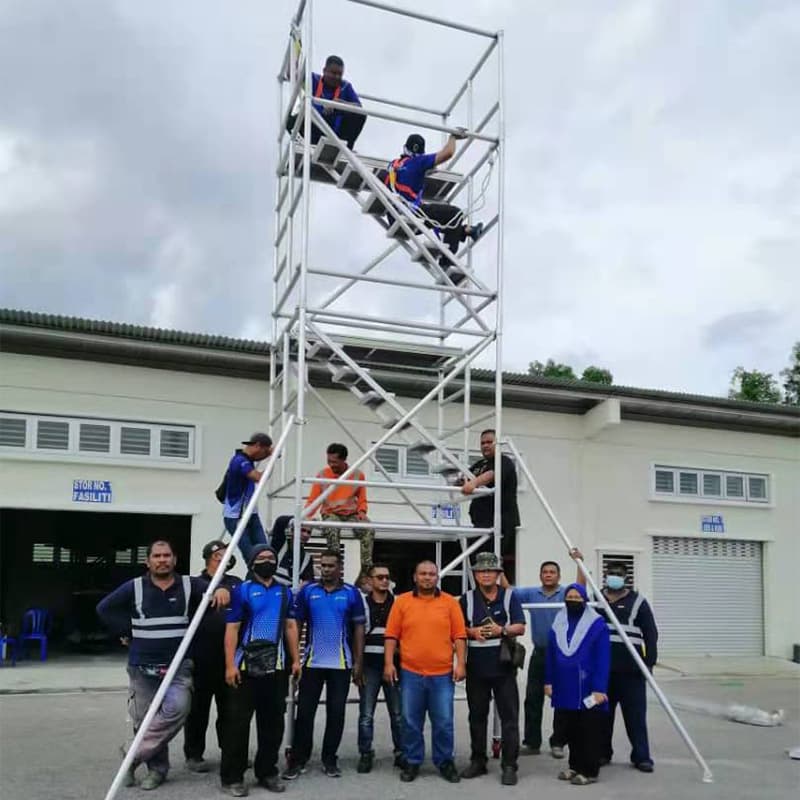
Core conclusions and decision numbers
This section answers the “should we proceed now?” question first, then exposes the evidence limits so teams do not over-interpret one rule from one market.
Scaff Safe 2024 signal
22% gap rate
SafeWork NSW 2024 findings report 22% of inspected sites had missing toe boards or brick guards.
NSW trend (2021 -> 2024)
28% -> 29% -> 22%
Campaign findings moved from 28% (2021) to 29% (2022), then down to 22% (2024), showing improvement but persistent failures.
OSHA inspection cadence
Before each work shift
OSHA 1926.451(f)(3) requires competent-person inspection before each work shift and after events affecting scaffold integrity.
UK inspection cadence
<= 7 days interval
HSE scaffold FAQ calls for inspection before first use, after events affecting stability, and at intervals not exceeding 7 days.
UK legal top-rail floor
>= 910 mm
Work at Height Regulations 2005 Schedule 2 sets a minimum top guard-rail height floor of 910 mm.
UK operational edge cue
>= 950 mm target
HSE scaffolding guidance gives 950 mm as a practical guardrail target when using equivalent barriers.
GB fatal context (2025/26)
31 / 126 were falls
HSE 2025/26 provisional RIDDOR data shows falls from height remained the leading fatal accident kind (31 of 126 worker deaths).
US fall fatalities (2024)
844 deaths
BLS CFOI 2024 reports 844 fatal falls/slips/trips and 370 construction/extraction fall/slip/trip fatalities.
Mid-page RFQ checkpoint
If the checker output is controlled or manual review, attach the boundary note before asking for a supplier quote.
Method flow: from keyword to action state
Step 1: Normalize intent and condition
Map the request to scaffold type, toe-board condition, and edge context. If any of these are unknown or damaged, the tool routes directly to manual review.
Step 2: Apply jurisdiction cue layer
Apply destination market signals first (OSHA numeric cues, HSE sufficiency framing, AU duty/licensing framing), then keep assumptions visible near the output.
Step 3: Check containment escalation trigger
If materials can exceed toe-board edge height or handling pressure is high near edges, route to controlled review with additional containment logic.
Step 4: Route to action state
Return RFQ-ready, controlled-review, or manual-review status with explicit boundary text and a CTA that can be sent to suppliers/site teams.
Step 5: Verify evidence boundary before commitment
Use the evidence-boundary table to avoid over-claiming from public data. Final confirmation still requires current system documentation and site checks.
Method and evidence matrix
| Jurisdiction / layer | Public signal | Toe-board baseline | Change trigger | Sources |
|---|---|---|---|---|
| EU (EN 1004-1:2020) | Mobile access towers require side protection including toe boards of at least 150 mm height. | >= 150 mm minimum height required to prevent falling objects on working platforms, even on low-level towers. | If low-level tower use ignores edge protection based on height alone, route to manual review (2020 standard eliminated low-level exceptions). | |
| AU/NZ (AS/NZS 1576) | Toe boards are a mandatory component of edge protection where there is a risk of falling objects. | >= 150 mm minimum height across general scaffolding systems and working platforms. | If a proprietary system toe board is cited without dimension, verify it meets the 150 mm local floor. | |
| US (OSHA) | Toeboard used for falling-object protection must meet dimensional and strength criteria. | >=3.5 in height; <=1/4 in clearance; openings <=1 in; 50 lb resistance where used. | If materials exceed top edge, escalate to paneling/screening or equivalent controls. | |
| US (OSHA) | Toeboard obligation is hazard-dependent: apply when employees below are exposed to falling tools/materials/equipment. | Where employee exposure below is controlled by barricades or equivalent measures, OSHA allows alternatives to a toeboard line. | Do not label every edge as “toe-board mandatory” without checking exposure below and barricade quality. | |
| US (OSHA interpretation) | Interpretation letters confirm toeboard logic is contextual rather than a one-size checkbox. | Hazard-control objective stays fixed, but control method can differ if one control introduces equivalent risk (for example at specific access transitions). | Access-point layout can require alternate controls if a toe board creates equivalent tripping hazard. | |
| US (OSHA mobile scaffolds) | Mobile-scaffold movement has strict boundaries for worker riding and platform condition. | Frequent movement plans require explicit movement controls; toe-board presence does not cancel movement hazards. | If teams plan to move occupied mobile scaffolds, route to manual review unless all OSHA ride-move conditions are proven. | |
| UK (legal baseline) | Work at Height Regulations require collective edge protection to be suitable and sufficient. | Top guardrail floor is 910 mm (Schedule 2), with toe boards or equivalent measures to prevent materials falling. | If guardrail/toe-board design is inferred from habit rather than declared dimensions, route to controlled review. | |
| UK (HSE operations) | Edge protection should prevent people and materials from falling or being kicked/rolled from deck edges. | Use toe board sufficient to prevent fall/roll-off, or equivalent barrier meeting protection intent. | If equivalent barrier route is used, maintain >=950 mm barrier condition and equivalent protection quality. | |
| UK (HSE inspection) | Inspection timing is explicit: inspect before first use, after events affecting stability, and at least every 7 days. | Do not use a single “installed” statement without cadence evidence in handover records. | If frequent relocation or modification occurs, treat each cycle as a new verification point. | |
| AU (SWA + state cues) | Duty classes and scaffold planning still require active edge/falling-object controls in use. | Toe-board adequacy should be checked with deck use pattern, not inferred solely from class label. | If load/handling profile rises, controlled-review path should include additional containment plan. | |
| AU (state enforcement) | Scaff Safe campaigns continue to report practical control gaps, including missing toe boards/brick guards. | Trend evidence (2021: 28%, 2022: 29%, 2024: 22%) confirms the gap is improving but not eliminated. | Treat “installed” as untrusted until continuity evidence is attached for the current work cycle. | |
| AU (QLD CoP) | Licensing threshold and role duties define competence/legal boundary, not automatic risk clearance. | Even below licensing thresholds, duty to control falling objects and falls remains. | If teams cite height threshold as a “safe-by-default” shortcut, route to manual review. | |
| Cross-market risk context | Falls remain material fatal risk in both UK and U.S. public statistics. | Toe-board integrity is one of several controls in a broader fall/falling-object prevention system. | When incident burden remains high, bias to conservative interpretation for ambiguous briefs. |
Evidence boundary: what this page can and cannot decide
| Source family | Can confirm | Cannot confirm | Action in this page |
|---|---|---|---|
| Regulatory text | Minimum criteria, mandatory boundary language, and escalation conditions. | Brand-specific compatibility, proprietary connection detail, and project-unique assembly exceptions. | Use for hard-stop gating and baseline screening; do not use as complete assembly approval. |
| Regulator guidance pages | Operational interpretation cues and examples for edge/falling-object protection intent. | A universal cross-market dimension set beyond what each jurisdiction explicitly publishes. | Use to explain decision context and risk communication in RFQ language. |
| State checklist / campaign findings | Field-observed recurring failures and inspection emphasis areas. | Direct transferability to every market, system type, or project complexity tier. | Use as risk-priority signal and trend signal, not as direct technical substitution for design/manual checks. |
| Duty-class guidance | Load-planning context and class-based framing for scaffold usage expectations. | Specific toe-board compatibility or universal containment sufficiency at each class. | Use for scoping and triage, then supplement with system-level detail. |
| Fatality statistics | Macro-level risk burden and need for conservative safety controls. | Direct causality for one site’s toe-board decision or product choice. | Use to set risk appetite and management attention, not technical dimensions. |
| Interpretation letters | How regulators reason through ambiguous cases like access-point conflicts. | A blanket exception that bypasses hazard assessment in all similar layouts. | Use for conditional logic in boundary states and control alternatives. |
| Status | Signal | Reason | Sources |
|---|---|---|---|
| Known now | EN 1004 (EU) and AS/NZS 1576 (AU/NZ) explicitly mandate a minimum toe board height of 150 mm on working platforms. | Both mobile tower and general scaffolding standards provide a concrete 150 mm baseline for edge protection in these markets. | |
| Known now | OSHA publishes explicit toeboard geometry and strength criteria where used for falling-object protection. | Direct regulatory text provides measurable thresholds. | |
| Known now | SafeWork NSW campaign data keeps reporting missing toe-board/brick-guard prevalence in inspected sites. | Multi-year public findings (2021, 2022, 2024) provide a practical trend signal rather than a one-off snapshot. | |
| Known now | HSE guidance requires toe boards or equivalent barriers sufficient to prevent fall/roll-off materials. | Operational guidance clearly states prevention intent. | |
| Needs manual confirmation | Universal cross-brand toe-board fit matrix for every scaffold system family. | Not present in reviewed open regulator/guidance sources; depends on manufacturer/system detail. | |
| Needs manual confirmation | A dedicated aluminium-only numeric toe-board threshold accepted across all reviewed markets. | Reviewed public regulator sources define protection performance and control intent, but do not publish one global aluminium-specific approval number. | |
| Needs manual confirmation | Single global threshold that safely replaces all destination-specific toeboard interpretation. | Cross-market sources align on prevention intent but do not normalize one global approval number. | |
| Needs manual confirmation | Project-specific sufficiency for heavy edge-side handling without additional containment. | Requires site method, material behavior, and local authority/manual confirmation beyond public baseline. |
Trade-off questions and counterexamples
This section blocks over-simplified yes/no decisions. If your brief matches any left-column question, apply the corresponding branch instead of forcing an RFQ-ready outcome.
| Decision question | Why it matters | If yes | If no | Sources |
|---|---|---|---|---|
| Are workers exposed below the platform edge where tools/materials could strike them? | OSHA ties toe-board obligation to falling-object exposure below, not to every scaffold edge in every context. | Treat falling-object controls as mandatory; verify toeboard dimensions or equivalent controls with evidence. | Do not auto-claim “toe board always mandatory”; verify whether barricade/canopy-equivalent controls are in place and effective. | |
| Can edge-side handling push tools/materials above the top edge of the toeboard? | Once stacked material exceeds top edge, toe-board-only protection can fail and escalation controls are expected. | Escalate to paneling/screening or equivalent containment and move result to controlled/manual review. | Toe-board route may remain viable, but keep condition continuity and inspection evidence visible. | |
| Will the scaffold be moved frequently during the task? | Movement raises drift risk and adds separate movement-control obligations that toe-board presence does not solve. | Require post-move verification and confirm movement rules before continued occupancy/use. | Maintain routine cadence checks; do not skip periodic inspections. | |
| Does your brief rely on one imported number across multiple destination markets? | Cross-market intent aligns on prevention, but legal text and enforcement framing are not identical. | Mark the brief as controlled/manual review and rewrite RFQ with destination-specific references. | Proceed with clearer accountability and lower rework risk. |
Route comparison and internal next paths
| Route | Best for | Public-signal strength | Caution |
|---|---|---|---|
| Toe Board Scaffolding Checker | Falling-object edge control decisions and aluminium scaffolding toe board screening. | Strong on toeboard rule interpretation and condition-based routing. | Does not replace scaffold-system assembly manuals or destination legal advice. |
| Scaffold Outriggers Checker | Stability envelope and overturning control where geometry or movement dominates. | Strong on height/width/movement triggers and route controls. | Not a substitute for toe-board and falling-object containment checks. |
| Scaffold Base Jacks Checker | Foundation and leveling decisions where support condition drives risk. | Strong on footing and compatibility boundaries for base hardware. | Does not resolve edge-containment gaps by itself. |
| Scaffold Castor Wheels Checker | Mobility and castor compatibility decisions for replacement and fleet planning. | Strong on wheel load, stem, and movement-use pattern framing. | Wheel compatibility does not validate toe-board integrity or falling-object controls. |
Risk matrix and mitigation path
| Risk | Trigger | Impact | Mitigation | Sources |
|---|---|---|---|---|
| Missing/damaged toe board treated as minor defect | Visible gaps, cracked board, loose fixing, or missing sections | High falling-object and edge incident exposure | Stop routine quoting; restore/verify condition first; document continuity before use. | |
| Overreliance on one-region numeric rule in another market | Copying one jurisdiction threshold into cross-market decision without context | Compliance mismatch and unsafe assumptions | Keep market-specific rule framing in RFQ and verify destination requirements explicitly. | |
| Materials stacked above toe-board edge without escalation control | Handling behavior exceeds toe-board-only containment envelope | Falling-object exposure below platform | Apply paneling/screening or alternative containment; reduce edge-side stacking. | |
| Relocation without post-move re-check | Frequent tower moves across uneven paths and reset cycles | Progressive condition drift and missed edge gaps | Require post-move toe-board continuity checks before re-occupancy. | |
| Licensing threshold mistaken for full safety threshold | “Below licensing height means no major toe-board risk” assumption | False confidence and delayed corrective actions | Separate legal/competency triggers from immediate fall/falling-object control triggers. | |
| No uncertainty disclosure in supplier or site handover | RFQ issued with generic “toe board fitted” text only | Ambiguous accountability and delayed rework | Attach condition evidence, route status, and boundary note in first communication. |
Scenario examples
FAQ: decisions, boundaries, and actionability
Ready to convert this toe-board review into a clean RFQ?
Use the CTA draft with condition evidence and boundary status, then route to adjacent pages only when toe-board risk is not the limiting factor.
Send scaffold type, toe-board condition, edge context, and market in one message to reduce back-and-forth.
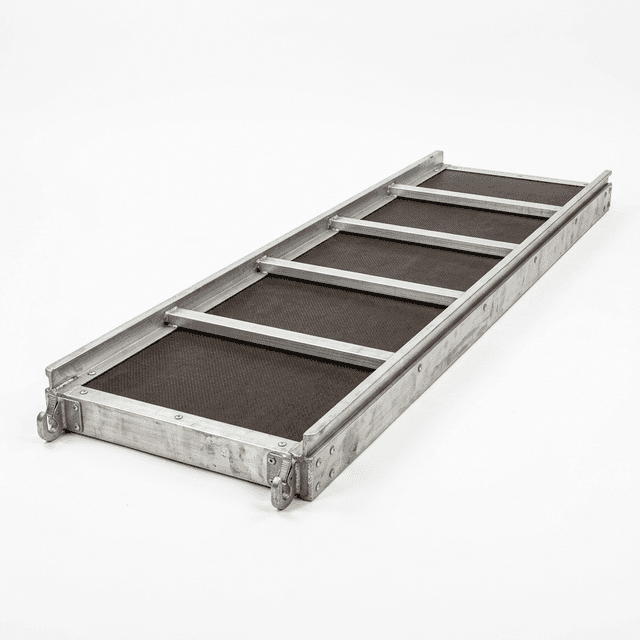
Source register (17)
Reviewed on July 3, 2026. This page keeps evidence links visible and marks unknowns instead of filling gaps with synthetic certainty.
Canonical URL: https://aluminiumscaffoldtower.com/scaffold-toe-boards
Published: May 3, 2026 · Updated: July 3, 2026